





 Make us preferred on Google
Overview of Top Crypto Exchanges in Singapore

Crypto in Singapore
According to a study, it is estimated that almost 16 percent of Singaporeans own some form of crypto. The same study also found that Singapore has the sixth highest rate of crypto ownership among people surveyed in 22 countries. Being a financial hub, Singapore is at the forefront of crypto and investors have been increasingly attracted to Singapore as a crypto hub, particularly due to its 0% capital gains tax policy for individual investors.
Crypto Regulation in Singapore
In Singapore, while crypto is not considered legal tender, crypto is considered DPTs (Digital Payment Tokens). This means that while cryptocurrencies are considered legal assets, they are still subjected to stringent regulatory measures according to Singapore law.
In Singapore, the Monetary Authority of Singapore (MAS), the central bank, regulates cryptocurrencies. The MAS first implemented its first crypto regulations in 2020 and has been actively updating these regulations to protect retail investors. As part of its regulatory framework, the MAS mandated that all crypto exchanges in Singapore must comply with Know Your Customers (KYC) procedures. This means that for users to access the exchange, they must first verify their identity, and exchanges are expected to keep accurate records of users’ transactions and details.
In this article, let us look at the top 8 exchanges, their different features, trading fees, fiat deposit methods, security features, pros & cons, and ongoing promotions.
Coinbase
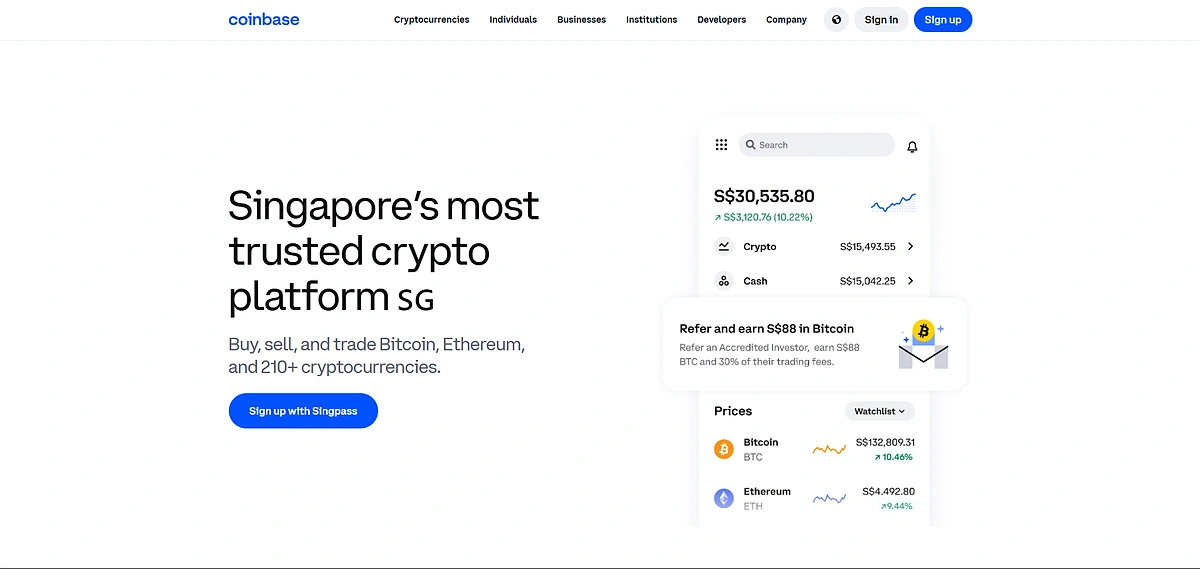
Founded in 2012 with over 100 million verified users globally, Coinbase is one of the largest global crypto exchanges. Regulated by the MAS, Coinbase holds a Major Payment Institution (MPI) licence to provide DPT services. For Singaporeans, the onboarding process is quick and seamless, as Coinbase has direct integration with Singpass for identity verification.
Features
Coinbase offers spot, futures and perpetual trading through both its main platform and Coinbase Advanced for more experienced users. Users can also stake and earn rewards on assets such as ETH, SOL, DOT and USDC, in line with staking programme guidelines set by MAS.
Trading and Other Fees
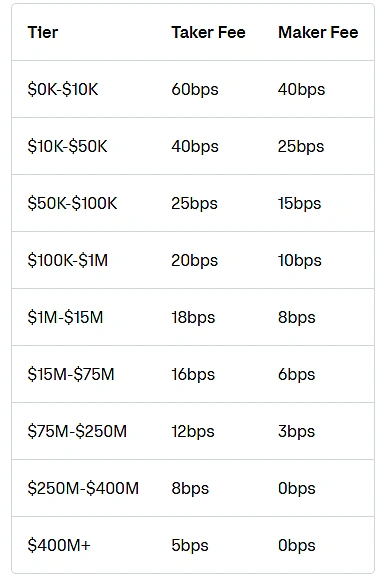
Coinbase implements a tiered fee structure where the fees are determined by the user’s trading volume on the site over the last 30 days. The spot trading fees are as follows, starting at 0.6/0.4% Taker/Maker fees with each bp (basis point) being 0.01%:
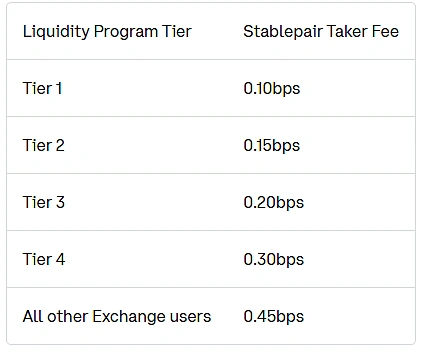
For stablecoin pairs, Coinbase offers a 0% Maker fee, while the Taker will pay the fee outlined below based on their tier. Note that USDT-USDC and USDT-USD pairs are charged the standard trading fees shown above.
Starting at S$4.99/month, users can opt for Coinbase One, an exchange membership which offers zero trading fees (capped based on membership tier) as well as boosted rewards and account protection. Free trials are available for Coinbase One Basic and Preferred.
Fiat Deposit Methods
Coinbase accepts SGD deposits through PayNow and bank transfers via FAST, or USD deposits via SWIFT. Users can also purchase crypto directly using Visa or Mastercard credit/debit cards.
Security Features
As a publicly listed company, Coinbase publishes financial statements on a quarterly basis, and is audited annually by an independent third-party. They boast holding a 1:1 ratio of customers’ assets, meaning that user funds are fully backed and withdrawable at any time.
Coinbase also offers a Vault feature for extra protection, allowing transactions to be canceled within 48 hours if unauthorised activity is detected. For added security, users can set up joint vaults, which require approvals from multiple users before transfers.
98% of user funds are held in offline cold storage, lowering the risk of exchange hacks. Users are also auto-enrolled for two-factor authentication (2FA), providing added layers of security.
Pros and Cons
Pros: Easy To Use
Many users prefer to use Coinbase due to its user-friendly interface and strong security features. Singaporeans in particular enjoy smooth signup through Singpass integration and SGD deposit methods. Notably, Coinbase also has 0 fees for USDC transfers, making it easy to on-ramp funds.
Cons: Limited Token Listings
However, Coinbase also has a limited range of spot altcoin listings compared to other global platforms. Users that enjoy trading newer alt coin launches may find this selection restrictive as Coinbase tends to list only well-established tokens.
Ongoing Promotions
Until 31 December 2025, Coinbase is running a promotion for Accredited Investors. Existing users can refer an accredited investor to the platform and receive S$88 in BTC, along with 30% of the referred user’s trading fees. The referred user will also receive S$88 in BTC upon successful onboarding.
Coinbase is also running a boosted rewards programme for USDC Perpetuals. Eligible users can earn attractive yields up to 12% APY on their USDC balances in their Perpetuals Portfolio, based on their reward tier. As Perpetual futures involve leverage and higher risk, they are recommended only for experienced traders.
Binance

One of the largest cryptocurrency exchanges in the world, Binance serves nearly 300 million users globally. However, in May 2024, the Monetary Authority of SIngapore (MAS) directed Binance to cease providing payment services in Singapore, disallowing them to solicit business from local users. As of November 2025, Binance remains on MAS’s Investor Alert List, warning Singapore users that Binance is not regulated or licensed in Singapore to provide payment services.
Binance no longer holds local marketing or promotional campaigns, although the app is still accessible on the Singapore App Store. Singapore users can still access the app and website, as the platform is not geo-blocked. Certain features are restricted, however, such as referral programmes and sign-up bonuses.
Although Binance remains accessible as a global platform, Singapore users should stay updated on any regulatory developments, as MAS rules regarding crypto exchanges may continue to evolve.
Features
Binance hosts a wide range of products with spot, margin, futures, perpetuals, options, staking, copy trading and more.
Trading and Other Fees
Binance uses a VIP program to categorize its users based on their trade volume and/or BNB holdings – which refers to the exchange’s native token.
The fees for spot trading are as follows:

Fiat Deposit Methods
Binance users can purchase crypto directly using Visa and Mastercard credit/debit cards at a 2% fee.
Security Features
Binance currently maintains at least a 1:1 ratio of Proof of Reserves (PoR) fully backing user assets. This means that for all cryptocurrency users deposited into Binance, Binance holds at least an equivalent amount in its reserves.
Binance also conducts a monthly blockchain-based audit of its PoR using Zero-Knowledge Proofs, and users can verify their own asset holdings using their own Merkle Leaf and Record ID on the Binance website. Binance also claims to store the majority of user funds in offline cold storage, reducing their susceptibility to hacks and exploits.
Binance also has an emergency SAFU (Secure Asset Fund for Users) to safeguard users from extreme situations.. As of November 2025, the SAFU wallet holds 1 billion USDC.
Pros and Cons
Pros: Large Product Suite
Binance offers an extensive range of products, with advanced trading tools such as options, copy trading and trading bots. This broad offering is one reason many investors, particularly experienced traders, prefer Binance over other exchanges.
Cons: Not MAS-licensed
Binance is not licensed in Singapore by the MAS and remains on their Investor Alert List. Although it is still accessible, certain features are restricted for Singapore users and rule changes could affect user access in the future. The user interface can also be complex for beginners, given the wide range of products offered.
Crypto.com

Used by over 150 million users globally, Crypto.com is one of the leading worldwide cryptocurrency exchanges. Based in Singapore, Crypto.com is licensed in the country as a Major Payment Institution (MPI) to provide DPT services. The platform is notable for its robust ecosystem of products, such as its Crypto.com Visa Card.
Features
Crypto.com offers spot trading for over 400 cryptocurrencies, as well as staking/Crypto Earn programmes via its App on holdings such as BTC, ETH and their native token CRO. Advanced users can also opt to use their Crypto.com Exchange, supporting perpetuals, futures and margin trading for over 300 pairs.
Users can also apply for their Crypto.com Visa Card, offering rewards such as airport lounge access and everyday spending cashback in CRO, based on a paid subscription or their CRO staking tier.

Trading and Other Fees
For Crypto to Crypto swaps in the App, Crypto.com offers a 0.00% fee, at a price spread that varies depending on volatility and liquidity. On Crypto.com Exchange, there is a tiered fee system which is determined by the user’s trading volume on the site over the last 30 days. The spot trading fees are as follows:

Customers with a CRO Balance (≥ 1,000) can enjoy additional trading fee discounts. CRO is the native token of Crypto.com.
Fiat Deposit Methods
Crypto.com exchange accepts SGD deposits through bank transfers via FAST and Apple/Google Pay, or SWIFT for USD. Alternatively, customers can also utilize the Crypto.com app to purchase crypto via credit/debit cards before sending it to their Crypto.com exchange account.
Security Features
Crypto.com also claims to have 100% of their assets securely held and a 1:1 ratio of their Proof of Reserves (PoR). This Proof of Reserves is verifiable on their website and is audited by an independent third party. Crypto.com also utilizes multi-factor authentication (MFA), where customers would need to verify their password, biometric, email, phone, and authenticator verification before making a transaction.
Singapore users are covered under the exchange’s ‘Account Protection Programme’ whereby customers can receive protection should an unauthorized transaction occur on their account. According to the program, customers may be eligible for goodwill protection of up to 250,000 USD, provided that they meet certain criteria. It is good to note that this program is up to the discretion of the exchange and should not be seen as a guaranteed reimbursement. The program does not cover losses due to negligence or mistaken authorizations.
Pros and Cons
Pros: Beginner Friendly
Crypto.com has been praised for being beginner friendly, thanks to an intuitive user interface and gamified elements such as Supercharger and Crypto Earn designed to simplify staking and yield-farming. Participation is straightforward and makes it easy for those newer to crypto.
Cons: High Fees
However, Crypto.com has relatively high deposit fees for credit/debit card deposits, as well as higher fees for swaps on its Exchange platform. Some fees are also opaque or hidden, such as withdrawal fees or markups on in-app swaps, which could make it less ideal for those looking to trade high volumes.
Ongoing Promotions
Crypto.com is currently offering a Welcome Bonus Mission for new users. New registrants who reach a trading target ($100 or $500 depending on region) within 30 days will receive a reward in CRO, ranging from a guaranteed minimum to a maximum of up to 1 BTC worth.
The exchange is also hosting a limited card starter incentive for their Visa Card until 31 December 2025, offering CRO rewards for those that sign up and spend a target amount based on their card tier as shown below:

OKX

Formally known as OKEx, OKX is another leading Singapore-based exchange with over 50 million users globally. In September 2024, OKX attained a Major Payment Institution (MPI) licence from MAS to offer DPT services in Singapore, previously having in-principle approval from MAS. For Singaporeans, the onboarding process is quick and seamless, as OKX has direct integration with Singpass for identity verification.
Features
OKX supports spot, as well as perpetual/futures trading. For Accredited Investors, it offers “On-Chain Earn” products to earn yield across tokens like ETH, SOL and ADA.
Trading and Other Fees

For non-Singapore users, holding OKB, the exchange’s native token, can provide additional fee discounts across markets, scaling with the amount held. Holding the token can also grant exclusive features such as higher withdrawal limits and allocations for token launches through OKX Jumpstart. These benefits are currently not available to Singapore users due to regulatory restrictions.
Fiat Deposit Methods
Users can deposit SGD instantly via PayNow and FAST/MEPS bank transfer, or SWIFT for USD.
Security Features
Similar to other leading exchanges, OKX claims to maintain a 1:1 Proof of Reserves (PoR) for all user assets, verifiable on their website. This essentially means that for all cryptocurrency that users deposit into OKX, there is an equivalent asset that is held in reserve by the exchange.
OKX also publishes monthly PoR reports, with their 35th Proof of Reserves issue in September showcasing $33.1B in primary assets backing customer deposits.
Pros and Cons
Pros: Easy To Use & Competitive Fees
With local fiat deposit methods like PayNow and FAST, as well as built-in Singpass integration and full MAS licensing, OKX is seamless for Singapore users. Moreover, their trading fees are competitive even at base levels, and improve as you move up tiers.
Cons: Limited Features for Singapore Users
However, some features that are available globally (such as OKX Jumpstart for token launches) may be unavailable in Singapore due to local regulations. Their staking and yield products are also restricted to Accredited Investors in Singapore, which means regular retail users are unable to access those features.
Ongoing Promotions
OKX is currently running a New User Referral and Welcome Bonus. Existing users can receive S$88 in BTC per referral after they verify their identity and complete required tasks within 30 days from account registration.
Kraken
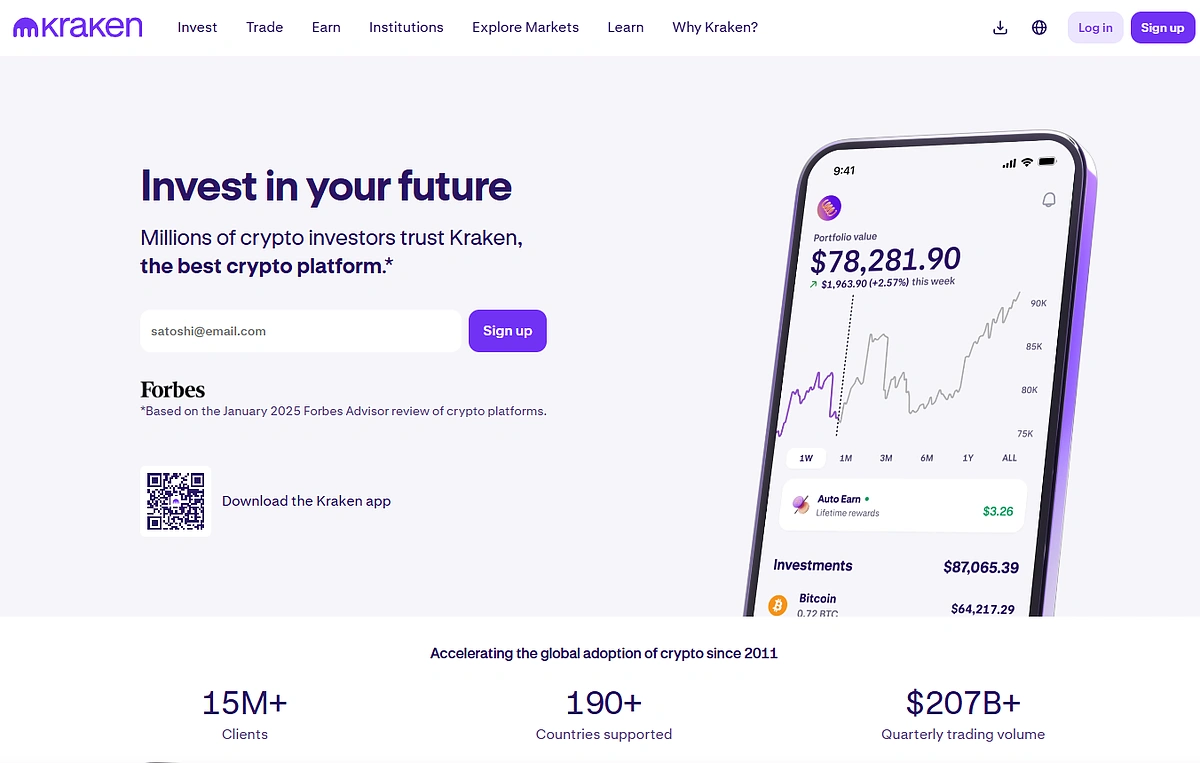
Kraken is a global crypto exchange based in San Francisco, operating since 2011 with over 15 million users to date. As of November 2025, the exchange is not currently licensed or regulated in Singapore to provide DPT services. Singapore users may face limits or restrictions due to local regulatory constraints.
Although Kraken remains accessible as a global platform, Singapore users should stay updated on any regulatory developments, as MAS rules regarding crypto exchanges may continue to evolve.
Features
Kraken supports spot trading, staking as well as lending services. With the option to use advanced order types and derivatives on Kraken Pro, the platform is a favorite for more experienced traders.
Trading and Other Fees
Kraken charges a fixed 1% trading fee. This can be waived for Kraken+ members (up to $10k/month), which is the exchange’s paid subscription model offering zero trading fees and premium perks. Kraken+ starts at $4.99 with a free 30 day trial available.
Kraken Pro, designed for more advanced traders, uses a tiered maker/taker fee structure based on the user’s trading volume over the past 30 days as shown below:

These fees on Kraken Pro tend to be lower than on the standard interface, making it more attractive for active traders with high volume.
Fiat Deposit Methods
Users can deposit fiat currency via bank transfer. SGD is not currently supported, although customers can use Visa or Mastercard debit/credit cards to purchase crypto directly.
Security Features
Kraken conducts regular Proof of Reserves (PoR) audits. Users can verify that their assets are backed by Kraken’s reserves on their website. Kraken also claims to store the majority of their assets in offline cold storage, which reduces the risk of online security threats.
Standard security measures such as 2FA, account recovery protection and withdrawal whitelists are also available.
Pros and Cons
Pros: Matured Exchange
Kraken is one of the longest standing crypto exchanges, dating back since 2011. With a wide product offering, supporting spot trading, futures, staking, etc., Kraken is trusted by more advanced crypto users globally.
Cons: Not MAS-licensed
Kraken is not currently licensed in Singapore by the MAS. Although it is still accessible, rule changes could affect user access in the future. Kraken’s wide offering can also be complex for beginners, and is more suited to experienced traders.
Coinhako

Founded in 2014 and headquartered in Singapore, Coinhako is one of the country’s most established crypto exchanges trusted by over 400 thousand registered users. Regulated by the MAS, Coinhako holds a Major Payment Institution (MPI) licence to provide DPT services.
Features
Coinhako supports spot trading, with SGD and USD wallets so that users can hold fiat balances and use them to trade crypto. The exchange also offers dollar cost averaging/recurring buy features, so that customers can schedule purchases automatically.
Trading and Other Fees
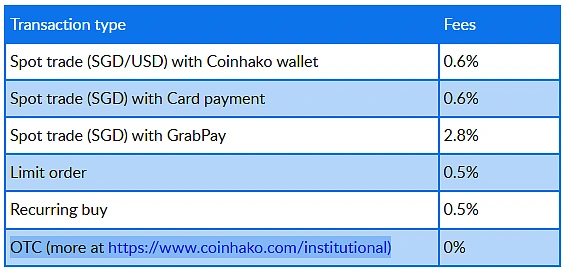
Coinhako utilises a fixed fee structure, based on the transaction type as shown below:
Fiat Deposit Methods
Coinhako accepts SGD deposits through PayNow and bank transfers via FAST. Users can also purchase crypto directly using Visa or Mastercard credit/debit cards, or through GrabPay.
Security Features
Licensed by the MAS, Coinhako adheres to Singapore’s strict regulatory requirements such as the MAS Technology Risk Management Guidelines, with certifications such as SOC 2 (Service Organization Control 2) and ISO/IEC 27001:2013. Coinhako claims to store most of user assets in cold storage, and conduct regular audits to mitigate security threats.
Users are also auto-enrolled for two-factor authentication (2FA), providing added layers of security, on top of Coinhako’s use of artificial intelligence and machine learning algorithms to detect threats and suspicious account activity.
Pros and Cons
Pros: Beginner Friendly
With a clean and straightforward user interface, Coinhako is praised for being easy to use. Smooth deposit/withdrawal rails for Singapore users and built-in recurring buy tools make Coinhako attractive for users intending to buy and hold crypto long term.
Cons: Limited Product Offering
Although it is beginner friendly, Coinhako lacks the advanced trading tools and breadth of trading pairs available on global exchanges. Advanced traders may prefer other exchanges offering derivatives trading, staking products and a larger number of token listings.
Gemini

Gemini is a US-based crypto exchange founded in 2014. As of October 2025, it has received In-Principle Approval (IPA) from the MAS for its Major Payment Institution license application. This means that Gemini has met the regulatory standards set by the MAS and is working with them to secure the full license in Singapore. Singapore users can sign up and verify smoothly with Singpass integration.
Features
Gemini features spot trading, as well as a more advanced “ActiveTrader” platform for traders that desire more advanced tools. The exchange offers staking for ETH and SOL, as well as recurring buy features. Gemini also offers a derivatives account for Perpetuals trading.
Trading and Other Fees
Gemini utilises different fee schedules, depending on whether users opt for the standard platform or ActiveTrader.
On Gemini’s standard interface, orders incur a 1.49% transaction fee as well as a 1% convenience fee.
ActiveTrader, designed for users with higher volumes, uses a tiered maker/taker fee structure based on the user’s trading volume over the past 30 days as shown below:

Fiat Deposit Methods
Users can deposit SGD instantly via PayNow and FAST bank transfer, or SWIFT for USD. Users can also purchase crypto directly using Visa or Mastercard credit/debit cards at a 3.49% fee.
Security Features
Gemini was the first cryptocurrency exchange and custodian to complete a SOC 1 Type 2 exam, SOC 2 Type 2 exam, and earn an ISO 27001 certification.
Similar to other leading exchanges, Gemini claims to maintain a 1:1 full-reserve ratio for all user assets, verifiable on their website Trust Center. This essentially means that for all cryptocurrency that users deposit into Gemini, there is an equivalent asset that is held in reserve by the exchange. The exchange is licensed by the New York State Department of Financial Services to hold customers’ digital assets in trust, adding a layer of security.
Pros and Cons
Pros: Easy to Use & High Security
With local fiat deposit methods like PayNow and FAST, as well as built-in Singpass integration and full MAS licensing, Gemini is seamless for Singapore users. Gemini’s emphasis on security and regulation also adds protection, as they are a fiduciary and qualified custodian under New York Banking Law.
Cons: High Fees & Limited Features
Gemini charges relatively high fees on their basic interface compared to other global exchanges, although their ActiveTrader platform offers more competitive fees. Their staking product is also currently limited only to ETH and SOL tokens.
Ongoing Promotions
Gemini is currently hosting a limited Referral Club campaign. Users can earn up to $50 in a crypto of their choice when their successful referral trades at least $100 within their first 30 days.
Independent Reserve
Founded in 2013 in Australia and expanding internationally since, Independent Reserve has over 450 thousand users. Its Singapore arm, Independent Reserve SG, is fully licensed by the MAS with a Major Payment Institution (MPI) license to provide DPT services.
Features
Independent Reserve offers spot trading as well as API access for developers and power users. They also have an OTC trading desk for larger orders (over S$50,000) for reduced slippage and improved execution.
The exchange features SGD and USD wallets so that users can hold fiat balances and use them to trade crypto, as well as dollar cost averaging/recurring buy features for users to make purchases automatically.
Trading and Other Fees
Starting at 0.5%, Independent Reserve uses a tiered fee structure based on the user’s trading volume over the past 30 days as shown below:

Fiat Deposit Methods
Independent Reserve accepts SGD deposits through PayNow and bank transfers via FAST.
Security Features
Independent Reserve claims that it keeps a majority of user funds in offline cold storage, and keeps full 1:1 reserves of all client assets with no commingling of funds. They also engage external auditors annually to verify their holdings and financial statements.
Standard security measures such as 2FA and withdrawal whitelists are also available.
Pros and Cons
Pros: Competitive Fees
Independent Reserve’s fees are relatively low compared to other regional exchanges, and scale lower based on user volume to reward active users. The OTC desk may be useful for those wishing to execute large trades smoothly.
Cons: Limited Product Offering
Independent Reserve does not currently support any derivatives or staking products for users, and only have 25 major cryptocurrencies listed on their exchange, making it less preferable for more advanced crypto traders.
Overview and Comparison Table
Here is a comparison of the 8 different exchanges:
|
Exchanges |
Coinbase |
Binance |
Crypto.com |
OKX |
Kraken |
Coinhako |
Gemini |
Independent Reserve |
|
Features |
Spot, Futures, Perpetuals, Staking |
Spot, Margin, Futures, Perpetuals, Options, Staking, etc. |
Spot, Staking, Perpetuals, Futures, Margin |
Spot, Perpetuals/Futures, and Staking for Accredited Investors |
Spot, Staking, Lending, Derivatives |
Spot, Automatic Purchases |
Spot, Derivatives, Recurring Buy |
Spot, API access for developers/power users, OTC desk |
|
Trading and Other Fees |
Tiered based on 30-day trading volume |
Tiered based on 30-day trading volume and/or BNB balance |
0% fee at a price spread, or tiered based on 30-day trading volume and/or CRO balance on Crypto.com Exchange |
Tiered based on 30-day trading volume |
Fixed 1% trading fee, Tiered based on 30-day trading volume on Kraken Pro |
Fixed free structure based on transaction type |
Fixed 1.49% transaction fee and 1% convenience fee, Tiered based on 30-day trading volume on ActiveTrader platform |
Tiered based on 30-day trading volume |
|
Fiat Deposit Methods |
PayNow, FAST, SWIFT, Debit Cards |
Credit/Debit Cards |
FAST, SWIFT, Apple/Google Pay, Credit/Debit Cards |
PayNow, FAST/MEPS, SWIFT |
Bank transfer, Credit/Debit cards |
PayNow, FAST, GrabPay, Credit/Debit Cards |
PayNow, FAST, SWIFT, Credit/Debit Cards |
PayNow, FAST |
|
Security Features |
Customer assets backed 1:1, Annual Audits |
1:1 Proof of Reserves, |
1:1 Proof of Reserves, |
1:1 Proof of Reserves |
Regular Proof of Reserves audits |
User assets held in cold storage, |
1:1 full-reserve verifiable ratio for user assets |
Claims to keep 1:1 full reserves of client assets |
|
Pros & Cons |
User-friendly, but limited listings |
Large product suite, but not MAS-licensed in SG |
Beginner friendly, but opaque/hidden fees on swaps |
Easy to use, but limited features in Singapore |
Trusted by advanced users, but not MAS-licensed in SG |
Beginner friendly, but limited product offering |
Easy to use, but relatively high fees |
Competitive fees, but limited product offering |
FAQ
Are Binance/Kraken legal? Can Singapore residents use unlicensed exchanges?
While access is not geo-blocked, MAS advises caution against unlicensed exchanges. Users can still technically access global exchanges such as Binance or Kraken at their own risk, but they are not regulated or protected under Singapore law.
What is the difference between In-Principal Approval (IPA) and a Major Payment Institution (MPI) license?
An IPA means that an exchange has met most key regulatory requirements, but is not yet fully licensed. A full license such as an MPI means that an exchange has completed all MAS checks and is formally authorised to provide DPT services to the public.
Do I need to report my crypto holdings to MAS or IRAS?
You do not need to report your crypto holdings to the MAS, as MAS does not regulate individual investors. Capital gains from buying and selling crypto are not taxable, but income from crypto-related activities may be taxable if deemed to be a business or as a payment for goods and services and should be declared to the IRAS.
Final Thoughts
In terms of features and fees, each exchange differs in terms of the interfaces, trading pairs, and fees that they offer. For example, day traders who make many transactions may choose to use an exchange with a lower trading fee. Ultimately, the choice of which exchange to use depends on an individual’s needs and preferences.
For beginners, most users choose Coinbase. Its easy to use interface and deposit methods make it an ideal choice as one of the largest exchanges in the world.
For more advanced traders, Binance’s range of products, from trading bots to alpha listings, is unmatched even amongst global exchanges. Their fees are also relatively low even at base levels, and only improve with higher volume.
Word of Caution
While exchanges allow for convenient trading and access to different forms of cryptocurrencies, it is important to keep in mind a popular crypto expression – not your keys, not your coins. This expression emphasizes the importance of not simply relying on an exchange’s security. While it may seem unlikely that established exchanges can fail, the collapse of FTX serves as a reminder that it is always good practice to store the bulk of your investment in personal wallets where you hold the keys.
Please note that this article is not meant to be taken as financial advice and investors should do their due diligence on what is best suited for their needs. Singapore users should stay updated on any regulatory developments, as MAS rules regarding crypto exchanges may continue to evolve.






 Or check it out in the app stores