



 Make us preferred on Google
This article is brought to you by FBS.

The US and China announced a 90-day pause in the trade war, reducing retaliatory tariffs from 125% to 10%. The move was an essential signal of easing tensions and a possible improvement in the global trade situation. While some duties remain in place, and new ones may appear in strategic sectors, the seemingly easing of trade tensions has already impacted global markets.
Bitcoin as a globally traded liquid digital asset is sensitive to shifts in global financial sentiment, and reducing trade barriers may stimulate the inflow of liquidity and weakening of the dollar, which is traditionally favorable for BTC.
Current Bitcoin Situation
Bitcoin continues to trade at key levels near all-time highs. This consolidation around important price points indicates that the market is preparing for the next significant move - either a continuation of growth or a correction.
Institutional capital flows into spot Bitcoin ETFs remain the main fundamental driver. According to Farside Investors, the growth in aggregate amount invested in such ETFs continues to show strong momentum, demonstrating sustained institutional interest. These inflows are considered one of the key bullish factors supporting the price and market sentiment.
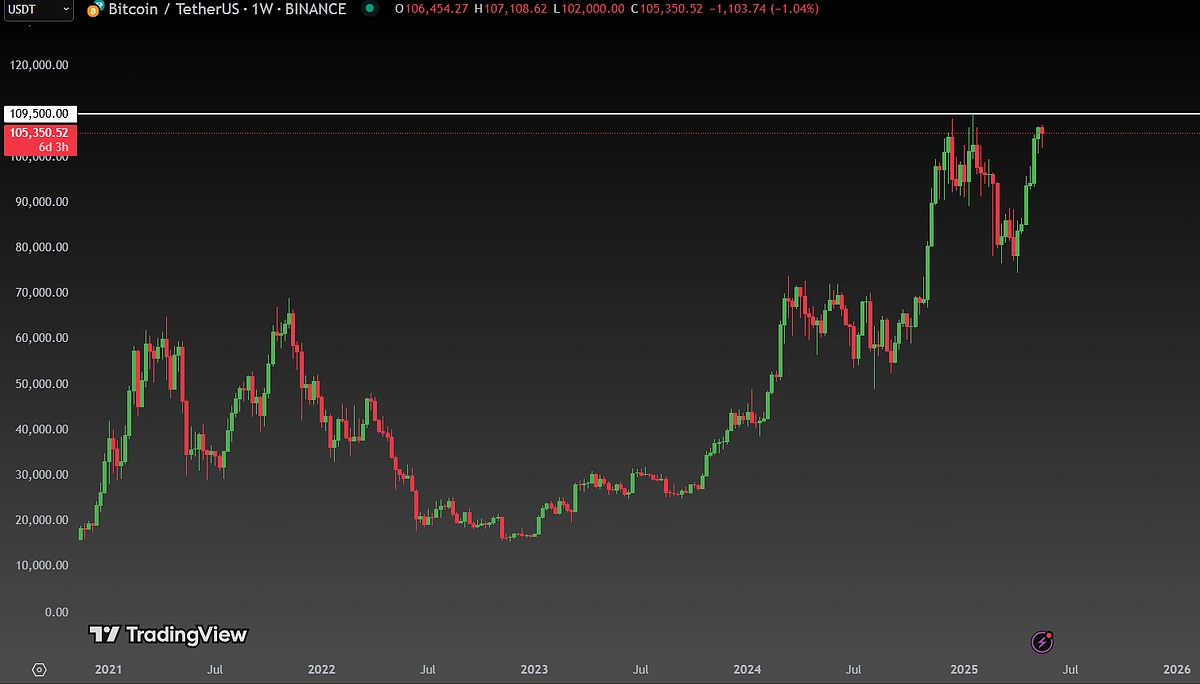
Current situation on BTC
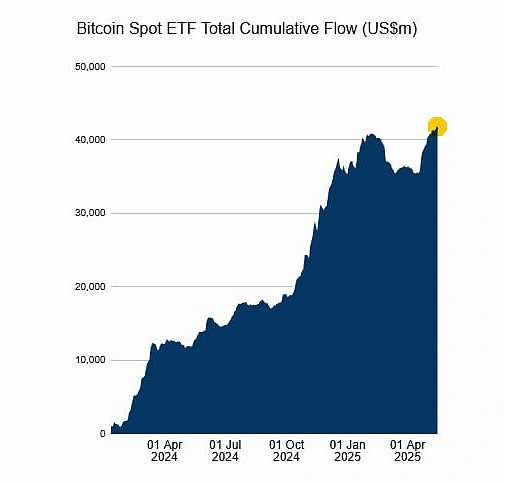
Source: Farside
The fall in the US Dollar Index (DXY) is also an essential macroeconomic factor. A weakening dollar traditionally favors alternative status assets, including Bitcoin. The decline in the DXY reduces pressure on BTC, stimulating demand from investors seeking protection from currency risk and inflation.

The DXY index has fallen since the beginning of the year.
While we are beginning to see increased moderation, Bitcoin remains highly correlated with stock indices, especially the Nasdaq technology sector and the broad S&P 500 index. This underscores the growing mutual influence of traditional and digital markets: when overall market conditions improve, BTC receives additional support.

How Does Geo-Economic Decoupling Affect BTC
Reducing trade tariffs between the US and China improves the global economic climate. This increases the hope that global trade will continue to flow with the US, the world’s largest consumer market, albeit perhaps at a reduced rate. In any case countries are also preparing for a slowdown in exports, with China beginning to stimulate its domestic economy.
In this environment, investors have grown a bit more confident to shift to riskier assets, including bitcoin. Increased monetary supply and a more positive global trade picture support increased demand for cryptocurrencies.
However, more global trade stability may allow the US dollar to strengthen, a factor traditionally considered to reduce Bitcoin's attractiveness as a hedge against currency risks. This may short-term limit BTC's growth, especially if investors see the dollar as a more reliable asset.
But, in today's realities, we are seeing an increasingly pronounced loss of correlation between the dollar index and bitcoin. Despite the strengthening of the dollar, demand for bitcoin continues to grow due to its growing role as an alternative asset, digital gold, and a tool for diversifying portfolios.
Thus, the reduction of trade tariffs may, in the short term, reduce the demand for bitcoin as a store-of-value asset, but in the long term, stimulate the development of the crypto market and the growth of BTC value due to increased global liquidity and investment interest.
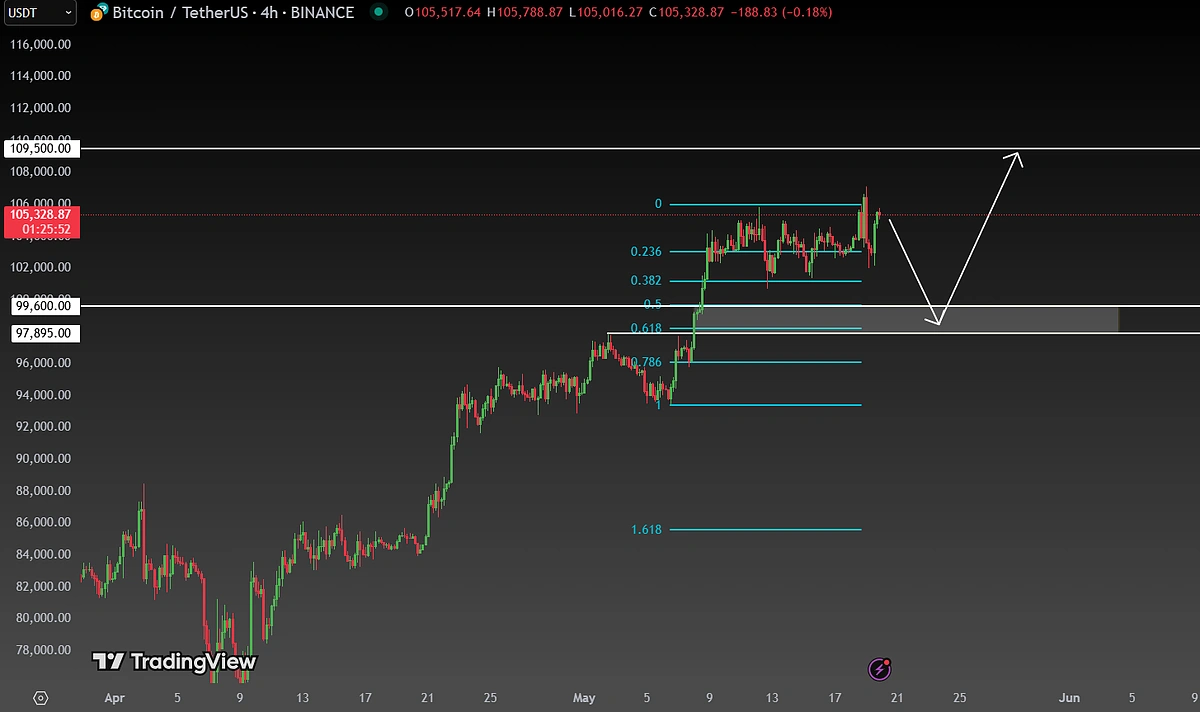
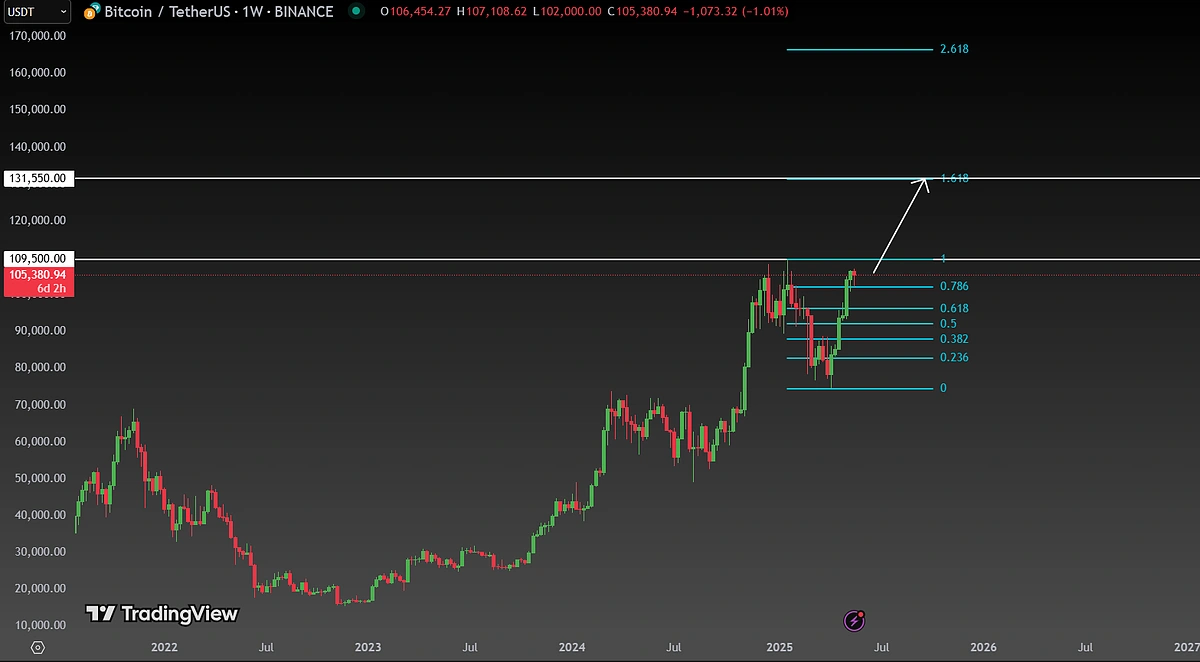
Potential long-term targets for BTC
Conclusion
The temporary trade truce between the US and China marks a pivotal moment for global markets, and Bitcoin is no exception. The reduction in tariffs signals easing geopolitical tensions, restoring confidence in global trade, and increasing capital circulation across financial markets.
In the short term, this environment may reduce demand for BTC as a defensive asset, especially amid a stronger US dollar. However, from a hedge to a growth-oriented, risk-on asset, Bitcoin's evolving status benefits it from rising global liquidity and institutional participation.
The ongoing capital inflows into spot Bitcoin ETFs show that Bitcoin is becoming deeply embedded in the broader financial system.
Ultimately, the trade de-escalation between the US and China reinforces a macro backdrop favorable to Bitcoin. It enhances investor risk appetite and supports long-term growth for BTC as a strategic asset in diversified portfolios.
This article is not intended to serve as investment or financial advice. Always do your own research before investing in any cryptocurrency.









 Or check it out in the app stores