



How Traders Find New Memecoins
When looking for new memecoins, traders look at factors like the meme’s virality, where the token has been listed, and activity around the memecoin, like how often it is mentioned on X (Twitter) and other social channels.
Key Takeaways
-
Memecoin traders experience decision fatigue due to the sheer number of memecoins launched daily, leading them to non-conventional ways of getting information.
-
Traders rely heavily on social media to discover and filter for potential memecoins to trade.
-
Traders screen for information credibility but most importantly to know if they are early/late in entering a trade.

The Memecoin Trading Wave
The advent of Pump.fun and other memecoin launchpads in a bull market environment where Bitcoin hit the historic price of $100,000, sparked a memecoin trading wave in 2024. Hundreds if not thousands of memecoins are launched daily and with many hitting million dollar valuations within hours before crashing down to 0. Such a volatile market environment gives traders a chance to strike it big if they play their cards right.
We wanted to explore how traders encounter such memecoins daily and what they do whenever they encounter them. We call this the token discovery process, how traders come to know of such tokens and how they eventually process the information, and finally acting on it.
This article was written by Loke Choon Khei using the findings of a survey done by our product designer, Choo Yuan Jie.
The Token Discovery Process
Traders are bombarded with endless options of shitcoins to trade daily. To filter and sieve through their options, traders often use trading terminal apps such as GeckoTerminal to find out what the trending tokens of the day are. On top of this, we know that many traders rely on crypto influencers, also known as key opinion leaders (KOLs) to potentially signal the next market move.
Overall, the token discovery process plays a crucial role in determining how crypto traders make their decisions. It is the process where traders discover “alpha”, a term used to describe any bit of information that can be used to make a profitable trading decision.
The Issue With Crypto Influencers/Key Opinion Leaders
It is well known that these KOLs or anyone with a large following have a tendency to exploit their followers as exit liquidity, selling their holdings right after publicly announcing support for said crypto tokens. Despite this, crypto Twitter (the crypto community on X) continues to place much weight onto the opinions of these influencers. For example, we know that traders categorised some memecoins as being in “Murad’s list”, a list of memecoins favored by the KOL @MustStopMurad, indicating that they acknowledge the opinions of some KOLs.
KOL Wallet Tracking
Tracking the transactions made by their favorite KOL is one method traders use to confirm/negate their trading thesis before making a trading decision. Traders would follow their wallets to look for things such as the value of their total holdings, when they entered a trade and if they had sold.
A Dune dashboard made to track the public wallet of @MustStopMurad by @seoul.

CoinGecko’s Focus Group Survey
With the prevalence of the exploitive behavior by some KOLs in mind, we designed a survey to find out how traders determine the reliability and credibility of the trading information they come across.
The CoinGecko product design team conducted this focus group survey in Q3 2024 where we dived deep to understand the inner workings of a crypto trader. We followed the trades made by several traders over the course of a week where they outlined in detail how they discovered tokens, what information they perceived and finally what information they acted on. In this article, we will proudly share with you our findings and how we intend to help crypto traders on our very own trading terminal, GeckoTerminal.
Our Findings
We found that crypto traders place a large emphasis on keeping themselves updated on what the current trends are. Trends such as animal coins, AI coins, chillguy coins are some examples of trends that traders may make use of.
Generally, the information crypto traders perceive can be categorized into two main types: off-chain sources or on-chain sources.
On-Chain Information Sources
On-chain information typically refers to the gathering and direct analysis of any data that is recorded directly on the blockchain. This could be the analysis of tokenomics (token supply, token age, etc.) or the tracing of token whale movements (large holders of a token). Some of the tools traders use to do this include: GeckoTerminal and block explorers such as Solscan.
Off-Chain Information Sources
Off-chain sources refer to information that is not directly recorded on the blockchain. Instead, these sources involve indirect channels where data and insights are shared, such as social media platforms like X (Twitter), Discord or Telegram. Usually, these are platforms where other users share the findings of their own on-chain analysis. Our research study focused on this method of obtaining alpha.
Now, let’s look at how traders obtain their alpha for up and coming memecoins.
Off-chain Tools for Token Discovery
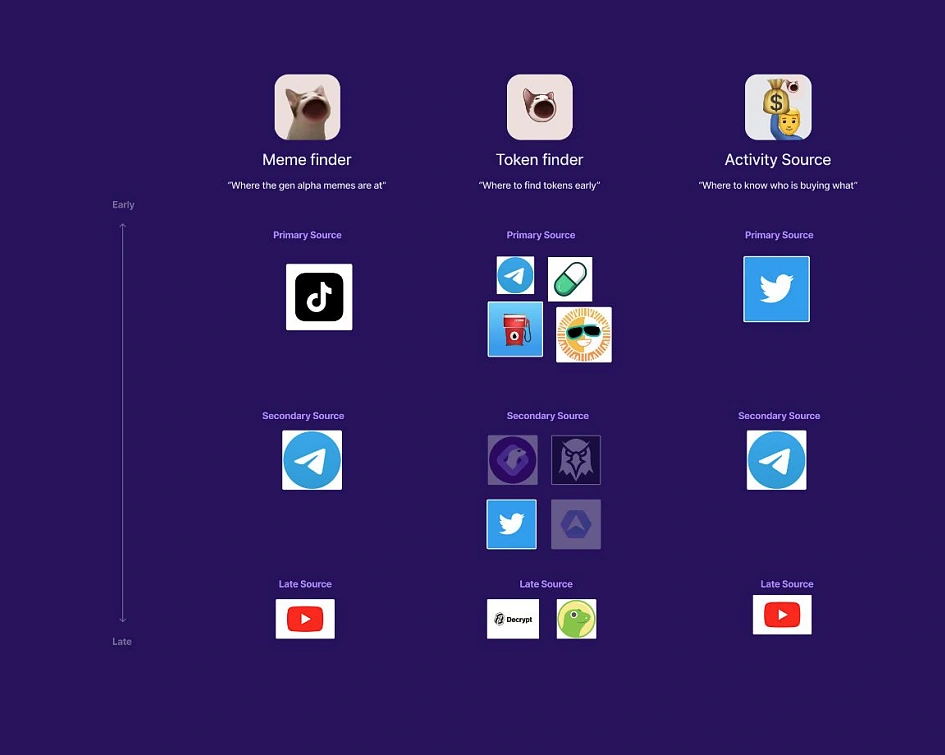
Whenever a crypto trader encounters a new token, they will index the popularity of tokens loosely with off-chain information (social media). The considerations of crypto traders can be broken down into 3 main categories:
-
Meme virality
-
Token listing location
-
Token activity
These traders use these 3 factors to answer one simple question: “am I early or late in buying this token?”.
Meme Virality
This is a loose understanding of how popular a meme has become. For instance, a viral meme usually spawns through social media, going viral on places such as TikTok before making its way as a memecoin on-chain and eventually onto crypto Twitter.
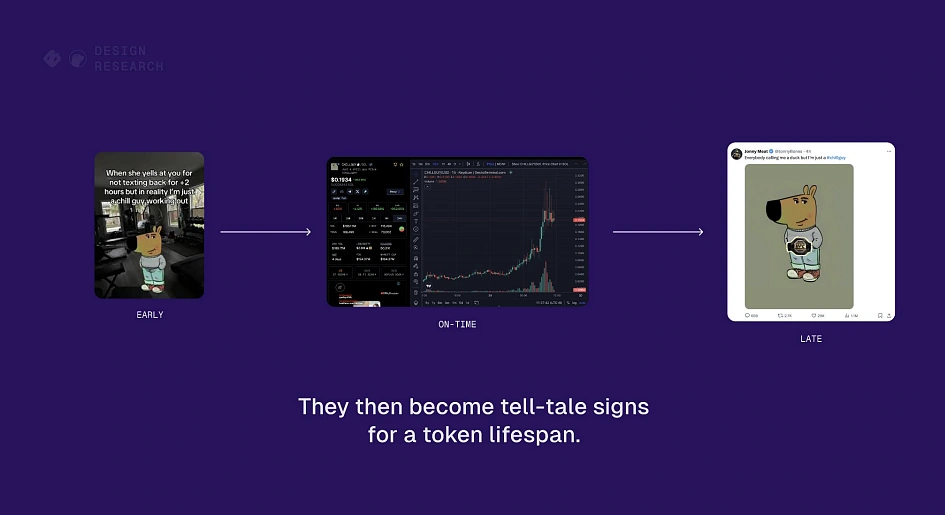
Traders will use how viral a meme has become, for instance how often they see it on their social media “For You Page” as a proxy variable for how popular a meme is. This will then translate into how early they are in buying a crypto token, meaning that less popular memes indicate they might be early.
Token Listing Location
Traders understand that where a token is listed is an indication of how popular a token has become. For instance, tokens with liquidity that exist solely on Pump.fun are at the early stages whereas tokens that have been listed by Binance are at the later stages. This also explains the market buzz around whenever a token has been chosen for listing at a centralized exchange (CEX).
Token Activity
After deciding on a theme/meme to buy, traders will consider the token activity specifically before making their choice. This is important because there may be multiple “copy-cat” tokens. Traders will then use things such as token age, token market capitalization, whale activity and crypto influencer support (Key opinion leader support) to make their choice. Specifically, a YouTuber speaking about a crypto token likely suggests that the token is in its later stages of popularity as compared to being primarily talked about on Twitter.
In summary, we mapped out how crypto traders determine the popularity of a token as follows:
Judging the Reliability of Information
We found that traders grade the reliability of information in terms of its earliness, originality and attention volume. Ideally, traders would like to be early, reading their information from a less known therefore original source and lastly read about a token that hasn’t taken off yet (low attention volume).

In an early scenario, the encountered information may perhaps be regarding a token which has little to no media attention, existing only where the token was initially created (pump.fun for instance) and has little or no trading volume. This information a trader encounters is categorized as “unreliable”.
Here is an example of a reliable source of information.

Reading about MOODENG, a popular memecoin on Decrypt, a popular crypto news site is reliable. That being said, reliable sources of information usually only come about after a trend/token has taken off. Naturally this means that crypto traders who want to get in early would undoubtedly have to take on some risk with more unreliable sources of information.
Our findings also explain why some traders continue to consider the insights shared by crypto influencers to be reliable regardless of the inside selling that may occur. Any posts by popular influencers are graded as reliable under this framework and thus become an important consideration for traders.
How to Use GeckoTerminal to Find New Memecoins
Recognising the need to quickly discern a token’s popularity, we incorporated several features onto our very own token terminal, GeckoTerminal, to aid crypto traders in this.
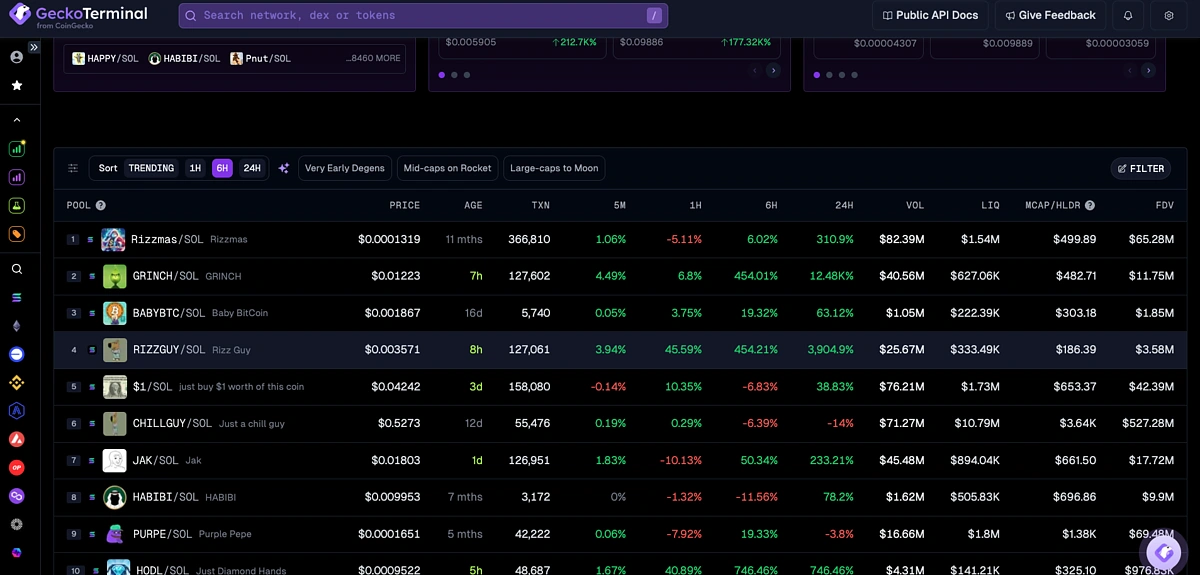
Flagging Out Freshly Created Tokens
We make it easy for you to identify if a memecoin has just been newly created, highlighting those that are under a week old for you!
Categorized Tokens and Trending Categories
Memes and themes change all the time, fret not if you can’t catch up on social media, we got your back. Sometimes we even manually categorize them! (we’re in the trenches too)

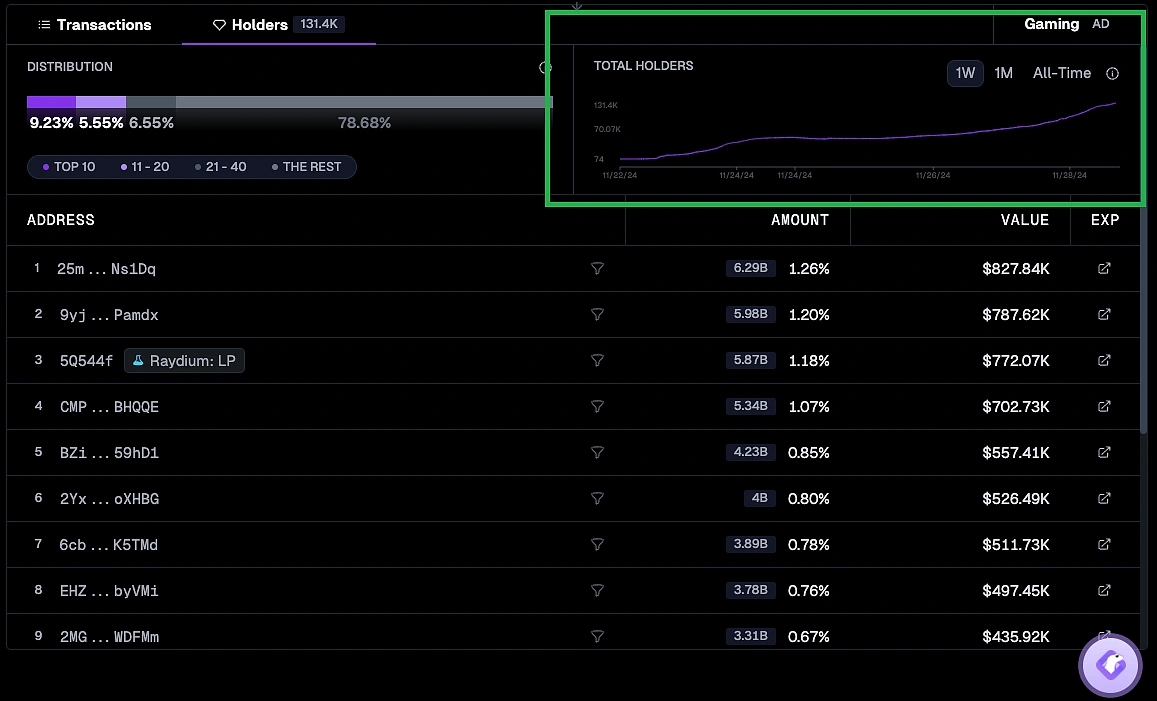
Historical Token Holder Information
Is ownership centralized? How many people are buying? We got it all nicely summarized in a single tab!
KOL Wallet Tracking
We tag KOL wallets under the top holders!

Other Ways Traders Discover Up and Coming Memecoins
We understand that the methods of discovering memecoins covered in this article are non-exhaustive. We note that there are also other ways such as paid Telegram/Discord groups, word of mouth and more. This article explores the philosophy of crypto memecoin traders, their concerns and logic, which can explain the other methods of discovering memecoins as well. We imagine as the industry evolves and more information becomes available, so will the trader’s discovery and trading methods.
Conclusion
We hope this article has been insightful and informative, if you would like to participate in any of our product testing and surveys in the future please fill up the form at https://forms.gle/cwRq3zfNy124GXf46. We wish our users the best of luck in their trading activities but once again stress that trading cryptocurrencies, especially memecoins, is highly risky. Never invest/trade more than you can afford to lose and always do your own research!







 Or check it out in the app stores