



 Make us preferred on Google
What Is Bitcoin DeFi
Bitcoin DeFi (BTCFi) transforms bitcoin from a passive asset into a productive one. Users can earn returns on their BTC, or use it in decentralized finance (DeFi) applications, while leveraging Bitcoin’s renowned security.
Key Takeaways
-
Bitcoin has earned its reputation as the longest-standing, most secure decentralized blockchain and has laid the foundation for the cryptocurrency space in its early days.
-
While Bitcoin’s blockchain was originally designed for peer-to-peer digital currency transactions, it has limited native support for complex financial applications.
-
Through various innovations like sidechains, Layer 2 (L2) solutions, and wrapped tokens, DeFi protocols are increasingly integrating with the Bitcoin ecosystem to unlock new financial use cases.
Why Should You Care About BTCFi?
BTCFi is a rising narrative in cryptocurrency, focused on bringing additional utility to bitcoin.
-
Put Your Idle Bitcoin to Work: Instead of just HODLing, BTCFi allows your bitcoin to potentially generate yield or be used as collateral.
-
Access New Financial Services: Engage in lending, borrowing, trading, and more without selling your Bitcoin.
-
Enhanced User Control & Transparency: Many BTCFi protocols are designed to be non-custodial, meaning you retain control of your private keys even when participating in the staking process.
-
Diversify Your Crypto Activities: Explore diverse financial strategies within the Bitcoin ecosystem itself.
What Is BTCFi: Bitcoin DeFi
Decentralized Finance (DeFi) has introduced a wide variety of applications that enable open, permissionless, and trustless financial services built directly on smart contract platforms. These services include Decentralized Exchanges (DEXs), lending and borrowing, yield farming, derivatives trading, and more, all without relying on traditional intermediaries like banks or brokers.
Many significant ecosystems like Ethereum and BNB Chain are full of high-value DeFi projects thanks to their versatile smart contract platforms. While DeFi has been steadily evolving on these networks, the biggest name in the game is still falling behind.
Bitcoin, the original and most valuable cryptocurrency, was designed to focus on providing a secure and decentralized digital currency. Yet, for all its prominence, Bitcoin has commonly been seen as a passive asset or store of value. The underlying blockchain prioritizes security and decentralization over flexible programmability and its scripting language is intentionally limited, which restricts developers from building complex applications natively on Bitcoin.
This is where Bitcoin DeFi, or BTCFi, comes into action to extend Bitcoin’s utility past its main focus. BTCFi is a collective term for protocols and applications such as sidechains, Layer 2 (L2) scaling solutions, and more. With BTCFi, bitcoin (BTC) holders can access DeFi’s powerful financial services while still leveraging Bitcoin’s unmatched security and brand.
Applying DeFi To The Bitcoin Ecosystem
To overcome Bitcoin’s limited scripting language and the base layer’s transaction throughput, BTCFi relies heavily on a few solutions.
-
Sidechains: These are separate blockchains pegged to Bitcoin and enable BTC to move back and forth while gaining additional features. Sidechains offer developers a flexible environment to build more complex DeFi applications while leveraging Bitcoin’s security.
-
Layer 2 Solutions: L2 solutions are built on top of Bitcoin to make transactions faster and cheaper.
-
Wrapped Bitcoin: The implementation of wrapped tokens allows BTC liquidity to flow into existing DeFi ecosystems since they are typically backed 1:1 by actual BTC held in custody.
-
Cross-chain bridges: Bridges enable BTC (or representations of it) to move between blockchains and improve interoperability between Bitcoin and DeFi platforms on Ethereum, Solana, and more.
The key intention of BTCFi is to integrate DeFi protocols within the Bitcoin ecosystem so users can access a range of services and applications that put their BTC to work. Some of these applications include:
-
Lending and Borrowing: Users can lend their BTC to others and earn interest in return. Alternatively, they can use it as collateral to borrow other cryptocurrencies, stablecoins, or even fiat-backed tokens.
-
Yield Farming and Liquidity Provision: Yield farming is the process of providing cryptocurrency assets to liquidity pools to facilitate trading and lending while earning rewards. BTCFi protocols enable BTC holders to deposit their tokens, or BTC-backed tokens, into these pools to earn passive income.
-
Real-World Asset Trading: Traders can gain exposure to real-world assets through synthetic assets. These assets work as tokenized representations of stocks, commodities, or fiat currencies. BTC holders can diversify their portfolios without needing to sell their BTC or interact with traditional financial markets.
-
Derivatives Trading: Derivatives such as futures, options, and leveraged tokens are financial contracts that derive their value from an underlying asset like Bitcoin. Traders can speculate on BTC’s price movements without owning the actual asset.
-
Restaking: Users who have staked their BTC on one protocol, such as a sidechain, can then restake the same BTC as collateral or liquidity in other protocols. This layered approach expands earning potential by stacking multiple revenue streams on the same BTC holdings.
How Bitcoin Benefits From BTCFi
Bitcoin already boasts a substantial user base and strong brand recognition, yet there is always potential for growth and improvement. Accelerating DeFi adoption and innovation can bring a number of benefits to the Bitcoin ecosystem. By combining Bitcoin’s strengths with DeFi’s opportunities, users can access a powerful and secure financial ecosystem unlike any other.
Advantages of BTCFi include:
-
Unlocking Idle Liquidity: Instead of letting BTC sit unused, traders can put their dormant BTC to productive use that can help generate yield and increase capital efficiency.
-
Incentivizing Ecosystem Growth: When users can unlock multiple revenue streams from their BTC holdings, especially in cases like restaking, it incentivizes active participation, increases transaction volume, and supports miners through fees.
-
Security and Trust: Bitcoin’s robust security and long track record are proof that Bitcoin can provide a secure environment for projects to build BTCFi applications that offer a high level of trust and resiliency.
-
Expanding Use Cases: BTCFi can broaden Bitcoin’s utility from a digital store of value into a dynamic financial instrument.
-
Cross-chain Efficiency: Integrating Bitcoin with multi-chain DeFi protocols creates a more diverse financial ecosystem.
Challenges Facing BTCFi
Nonetheless, the road to building DeFi applications on Bitcoin still holds a number of challenges.
-
Scalability: Bitcoin’s base layer is able to process only about seven transactions per second. Such limited speed will affect the throughput for more complex DeFi applications.
-
Smart Contract Constraints: Developers also face smart contract limitations due to Bitcoin’s limited scripting language, which makes it harder to build sophisticated applications directly on chain.
-
Fragmentation: Competing protocols and standards can lead to fragmentation and interoperability challenges. This results in the ecosystem being spread across multiple separate platforms, sidechains, and L2s that don’t fully operate with each other.
-
Higher user barrier: With multiple protocols and platforms, users face multiple barriers when they are required to understand complex bridging processes, handle a number of different wallets, or manage wrapped versions of BTC.
-
Transparency: Debates were raised at the start of 2025 on whether projects were reporting authentic TVL data or including false statistics and double counting to inflate figures.
Top Five BTCFi Protocols
While BTCFi might still be in its early stages, there are a few notable projects already making headway in the space. Based on Total Value Locked (TVL) data taken from DeFiLlama at the time of writing, the leading BTC DeFi protocols include:
|
Protocol |
Category |
TVL (approximately) |
|
Babylon Protocol |
Restaking |
$4.9B |
|
Lombard Finance |
Liquid Restaking |
$2.0B |
|
SOLV Protocol |
Liquid Restaking |
$1.8B |
|
Coffer Network |
Restaked BTC |
$295.7M |
|
b14g |
Restaking |
$214.5M |
Data taken from DeFiLlama on June 3, 2025
Babylon Protocol
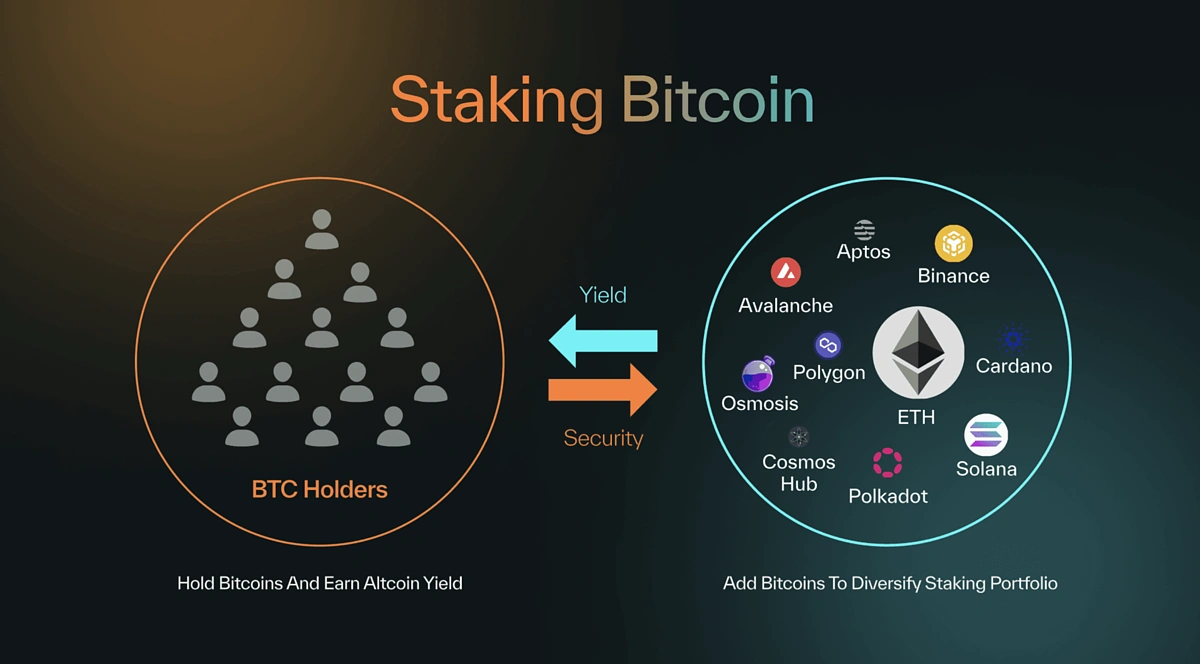
Babylon is a Bitcoin-native staking protocol that allows BTC holders to stake their assets directly on Proof-of-Stake (PoS) blockchains to earn yield. Self-custodial staking on Babylon Chain lets users maintain full control over their funds and removes the need for any intermediaries or third-party custodians. Instead, users send a staking transaction to the Bitcoin blockchain that then locks their tokens in a self-custody vault. Participants who provide finality to the Babylon Genesis Chain are then rewarded with the protocol’s native token, BABY.
Babylon Chain was founded by David Tse and Fisher Yu, who now serve as CEO and CTO respectively. In May 2024, Babylon Chain closed a funding round of $70 million that was led by Paradigm and received participation from Bullish Capital, Polychain Capital, and more. Since the phased rollout began in August 2024, Babylon now accounts for about 80% of the TVL in BTCFi with approximately $4.9 billion as of early June 2025.
Lombard Finance

Lombard Finance is a protocol built on top of Babylon to create a two-sided BTC yield opportunity. At the core of Lombard is LBTC, a liquid staking token (LST) that represents BTC staked on Babylon either directly on Babylon or through Lombard. While Babylon acts as the foundation for LBTC and also provides economic security to Lombard, LBTC helps to make staking more desirable to BTC holders since it can be used across multiple blockchains and DeFi applications for additional yield opportunities. At the time of writing, it is integrated across notable blockchains including Ethereum, Sui, and Berachain.

Lombard’s DeFi Vaults provide users with further yield-generating opportunities when they deposit LBTC, wBTC, eBTC, or cBTC. The vault engages with DeFi strategies like providing liquidity on Decentralized Exchanges (DEXs), lending through platforms like Morpho, and engaging in yield trading on Pendle.
Founded in April 2024 by a team with expertise from established projects including Polychain, Argent, Babylon, and Coinbase, Lombard also successfully raised $16 million in a seed round in July 2024 led by Polychain Capital with participation from Babylon, dao5, Franklin Templeton, and more. Lombard Finance has turned BTC into an active asset and amassed a significant user base, with a total TVL of $2.0 billion as of early June 2025.
Solv Protocol
Meanwhile, Solv Protocol aims to enhance Bitcoin’s utility and yield potential through several solutions centered around SolvBTC, the protocol’s native token that is pegged 1:1 to bitcoin. SolvBTC enables users to move their Bitcoin assets across multiple blockchains like Ethereum, Avalanche, and others. The protocol categorizes its BTC reserves into Core Reserve Assets which have the most secure and liquid assets, and Innovative Reserve Assets which consist of wrapped BTC variants.
Users can unlock yield opportunities through SolvBTC.LSTs (Liquid Staking Tokens representing staked SolvBTC) across various DeFi platforms like Babylon, EigenLayer, and Symbiotic. The protocol also leverages validator rewards on Bitcoin L2 networks and sidechains by committing SolvBTC.LSTs to consensus mechanisms. Solv Protocol’s architecture includes the Staking Abstraction Layer (SAL) that is designed to streamline Bitcoin staking through coordinated services such as LST issuance, staking validation, and yield distribution.
Solv Protocol is supported by $25 million in total funding from notable investors including Binance Labs, Blockchain Capital, Laser Digital, Spartan, gumi Cryptos, and more. The protocol has also gone through extensive security audits by firms like Quantstamp, Certik, SlowMist, Salus, and Secbit. At the start of June 2025, the protocol achieved a TVL of $1.8 billion.
Coffer Network
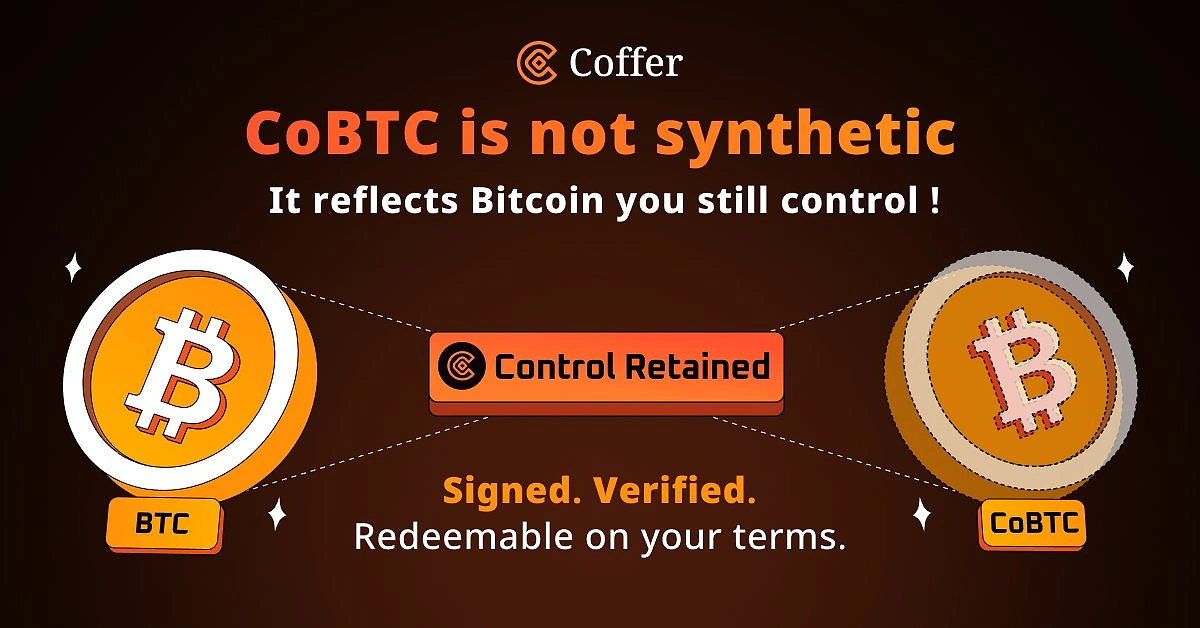
Bitcoin holders who want to maintain full control over their assets while participating in DeFi applications can also consider Coffer Network. The platform uses non-custodial smart accounts and multi-signature protocols that allow users to automate DeFi strategies without relinquishing custody of their BTC.
The key component of Coffer Network is CoBTC, a self-custodial Bitcoin product that provides a permissionless exit for Bitcoin holders and facilitates leveraged yield generation. CoBTC enables users to engage in DeFi activities such as staking and yield farming across various platforms while avoiding the risks associated with centralized custodianship.
As of the start of June 2025, Coffer Network has seen significant growth and achieved a TVL of approximately $295.7 million. This growth reflects a growing interest in Bitcoin-native DeFi solutions that uphold Bitcoin’s ethos of decentralization.
b14g
Last but not least, b14g is focused on addressing the limitations of existing restaking models by introducing a dual-staking layer where users stake both BTC and the protocol’s native token. This approach ensures that the native token plays a key part in the restaking process and reduces sell pressure, which can occasionally undermine token value and protocol sustainability. b14g is building a modular layer that other protocols can flexibly customize to fit their tokenomics and security needs.
After launching in December 2024, b14g quickly gained traction in the BTCFi space and surpassed $12 million in TVL within two months. Since then, the platform’s TVL has surged to $214.5 million as of early June 2025.
Future of BTCFi
BTCFi is transforming Bitcoin from an asset limited to being a store of value into an active participant in decentralized finance, increasing Bitcoin’s overall utility and attractiveness as an asset class. It introduces new use cases and economic opportunities for BTC holders while offering significant advantages in security, liquidity, and decentralization.
The sector has been steadily evolving with protocols like Babylon, Lombard, Solv, Coffer, and b14g leading the way in adoption. Although BTCFi still has its own set of challenges, the sector is expected to continue growing as more protocols build new financial models tailored to Bitcoin’s unique characteristics.









 Or check it out in the app stores