



 Make us preferred on Google
Top dApps and Platforms on Sonic
Sonic is a high-performance Layer 1 blockchain that was launched by the team behind Fantom. It was designed to tackle blockchain inefficiencies like high transaction costs, network congestion, and fragmented liquidity. Lately, the Sonic ecosystem has been buzzing with activity with many new projects, like Silo Finance and Stout, entering building on the chain.
This article will list 12 projects building relentlessly on Sonic in 2025. All projects, except Magpie Protocol, are ranked in decreasing order of TVL at the time of writing.
Key Takeaways
-
Fantom rebranded to Sonic Labs in August 2024, launching the Sonic network.
-
Sonic processes over 10,000 TPS with sub-second finality.
-
Top projects like Pendle, Silo Finance, BEETS, and Shadow Exchange bring yield trading, isolated lending, liquid staking, and innovative DEX models.
-
New protocols such as SwapX, Origin Protocol, and Magpie Protocol enhance liquidity, cross-chain swaps, and yield farming on Sonic.
-
Leveraged yield strategies (Eggs Finance, Vicuna Finance) and decentralized stablecoins (Stout’s DUSX) broaden Sonic’s DeFi potential.

Enter The Sonic Ecosystem
Few projects have demonstrated resilience and adaptability quite like Sonic.
Fantom started in 2018 as a Layer 1 platform built to rival Ethereum with its high-speed, low-cost transactions via the Opera network. Now, it has evolved into something even bolder.
In August 2024, the Fantom Foundation rebranded to Sonic Labs, unveiling the Sonic network. The rebrand was a result of the need to overcome Opera’s growing pains, like congestion during peak usage, and to push beyond its initial limits. With the new network cranking out over 10,000 transactions per second and sub-second finality, Sonic solves scalability bottlenecks while adding a Layer 2 bridge to Ethereum for interoperability.
Sonic’s core mission is to tackle the inefficiencies that plague traditional Layer 1 blockchains. These include:
-
High transaction costs that discourage small-scale users from engaging in DeFi.
-
Network congestion and slow finality in times of high activity.
-
Fragmented liquidity due to the proliferation of Layer 1 and Layer 2 chains, making cross-chain composability a pressing issue.
As we move further into 2025, Sonic and the projects building on it are continuing to occupy more mindshare everyday, with over $600 million in TVL at time of writing.

This article highlights the top projects on Sonic that are driving innovation and capturing liquidity. The projects, with the exception of Magpie Protocol, are organized by Total Value Locked (TVL) in descending order as of the time of this document.
1. Silo Finance: Isolated Lending Powerhouse
Silo Finance is a non-custodial lending protocol that offers risk-isolated money markets for a wide range of assets.

Unlike traditional lending pools, each asset in Silo has its own “silo” paired with a bridge asset (like a stablecoin), so risks aren’t shared across assets. This design lets users lend or borrow Sonic’s native S (and other tokens) without worrying about one bad asset collapsing the whole market.
Silo’s isolated model also enables high capital efficiency – for example, correlated assets (like liquid staking tokens) enjoy higher borrowing power, and each market can have custom interest rate curves tailored to the asset.
Silo was an official launch partner on Sonic (deployed at mainnet launch in Dec 2024). Since then, it has since become the largest DeFi protocol on Sonic by TVL, accounting for over 50% of Sonic’s total DeFi value.

Silo’s key differentiator is its risk-isolation model. Each lending pool contains at most two assets (an isolated asset + a base asset), so “no cross-contamination” can occur.
This means conservative lenders can supply assets without exposure to unrelated tokens, a major safety improvement over typical pooled lending. At the same time, borrowers get high efficiency (able to borrow more against correlated collaterals) since Silo doesn’t need to overcompensate for unrelated risk.
This combination of safety and capital efficiency has made Silo immensely popular on Sonic.
Check out Silo Finance on X to stay up to date with their latest developments.
2. BEETS: Core Staking & Liquidity Infrastructure
BEETS (run by the Beethoven X team) has evolved from a Balancer-style DEX on Fantom into the core staking and liquidity infrastructure on Sonic. BEETS’s unique value is being both a staking service and a DeFi platform.
It now focuses on Sonic’s liquid staking and related yield pools. Users can stake their S on BEETS to receive stS (staked Sonic), which is a liquid representation of staked S.
Holding stS earns the normal network staking yield with auto-compounding, while still allowing users to trade or use stS in DeFi. Around this LST, BEETS has built a variety of liquidity pools and yield opportunities – for example, a special pool partnering with Origin Protocol that pairs wrapped Origin Sonic (wOS) with stS. This makes BEETS a hub – it issues the staking token and provides places to deploy it.

With Fantom’s rebrand to Sonic, Beethoven X migrated its platform and rebranded to “BEETS”, aligning with the new network. During this transition (late 2024), BEETS pivoted away from being just an AMM and launched the stS staking system.
By combining “liquid staking + DeFi pools”, it effectively drives a flywheel of liquidity for Sonic. Stakers enjoy auto-compounded rewards and can immediately use stS in, say, a yield farm or as collateral – something not possible with standard staking.
BEETS’s heritage as an AMM means it can craft sophisticated pools (weighted indices, etc.) around stS, providing stable yields for liquidity providers.
Check out BEETS on X to stay up to date with their latest developments.
3. Shadow Exchange: Concentrated Liquidity DEX with x(3,3)
Shadow Exchange is a Sonic-native decentralized exchange known for its innovative tokenomics. It’s a concentrated liquidity AMM (similar to Uniswap v3 model for efficient trading) but what really defines it is the SHADOW token’s x(3,3) model.

This model is an evolution of Andre Cronje’s ve(3,3) concept: users stake SHADOW to get xSHADOW and can exit anytime but if they unstake early, a fee (penalty) is taken and distributed to those who remain staked. In essence, “those who stay, win”.
Shadow Exchange has been the breakout DeFi project on Sonic. In one week of Feb 2025, SHADOW’s market cap went from ~$5M to ~$32M – a +500% gain – making it one of the hottest tokens in the ecosystem.
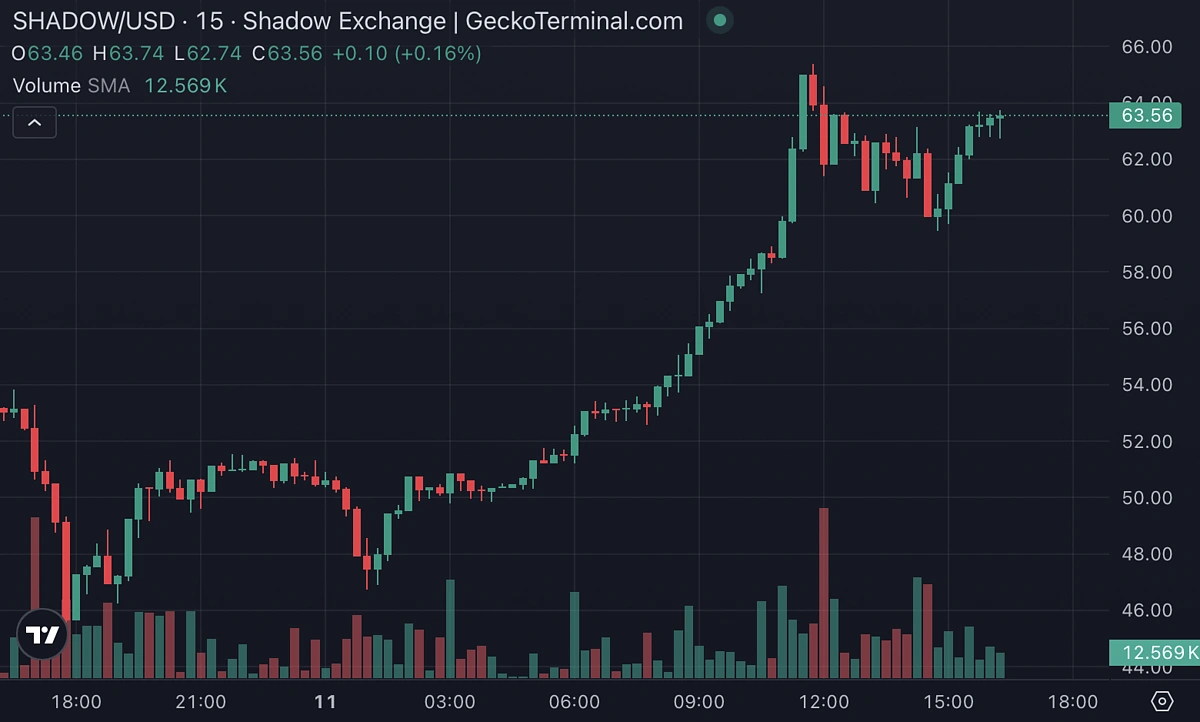
At the time of writing, Shadow Exchange’s TVL sits just below $100 million.

Shadow’s use of concentrated liquidity means traders get good prices and LPs can earn fees efficiently, further attracting liquidity.
Check out Shadow Exchange on X to stay up to date with their latest developments.
4. SwapX: Primary Liquidity Layer & Aggregator
SwapX is a next-generation DEX that aims to be the “primary liquidity layer” on Sonic. It is essentially a decentralized concentrated liquidity AMM (CLAMM) built specifically for Sonic’s high-speed environment.
SwapX didn’t reinvent the wheel from scratch; instead, it integrates proven DeFi tech – notably Algebra Finance’s v4 AMM engine – and augments it with its own innovations.
The exchange supports concentrated liquidity (allowing LPs to choose price ranges), and it layers on an Automatic Liquidity Management (ALM) feature, which can actively manage LP ranges for better yields. It uses Algebra’s concentrated liquidity (a well-tested engine for Uni v3-like pools) and adds ve(3,3) tokenomics (to drive liquidity via vote-escrowed incentives).
Moreover, SwapX is designed to be modular via plugin technology, meaning developers can extend its functionality (for example, integrating other protocols or custom fee strategies).
This all-in-one approach means SwapX is an exchange as well as a base layer that other protocols build on. For example, an optimized routing hub for Sonic or a platform where projects can easily start liquid markets. In a way, SwapX is trying to be to Sonic what Curve + Solidly combined were to earlier chains.

SwapX has steadily been onboarding projects: many new Sonic tokens (including memecoins and smaller caps) use SwapX for initial liquidity, given its flexibility. Its TVL is distributed across concentrated positions, so it’s a bit harder to compare directly, but it’s regarded as one of the significant DEXs by TVL on Sonic.
Check out SwapX on X to stay up to date with their latest developments.
5. Rings: Meta-Stablecoin Offering Yield for Stakers
Rings is a yield-bearing stablecoin protocol, where users can mint scETH and scUSD by depositing stablecoins or ETH on the Ethereum mainnet fee-free.
When minting scETH and scUSD on Sonic, Rings will send the underlying assets to a Veda boring vault on Ethereum mainnet, where it will be used to farm yield. Once per epoch, the yield generated by this vault on Ethereum will be used to mint new scETH and scUSD, which will be distributed among Sonic dApps based on the gauge vote results.

These assets can then be staked through Rings on Sonic to received staked scUSD and staked scETH, where they will be sent to a Veda boring vault on Sonic to be used for automated farming strategies, rebalancing assets, and redistributing yield to stakers.

Users can also acquire a veNFT, which grants voting rights for protocol gauges, by locking an amount of staked scTokens and a lock duration. Active veNFTs have a "balance", which represents the vote power of the veNFT.
At time of writing, Rings has over $108 million in TVL, based on the amount of tokens deposited in the boring vaults.

6. Origin Protocol: Liquid Staking Token & Yield Aggregator
Origin Protocol introduced Origin Sonic (OS), Sonic’s premier Liquid Staking Token (LST). It allows S holders to stake and secure the network while earning compounded staking yields, and it issues a liquid token (OS) that can be used freely in DeFi.

Origin designed the token, OS, to be an “S-tier” asset, meaning it’s integrated across Sonic’s top DeFi apps for maximum utility.
For example, OS holders can deploy their tokens in lending markets, DEX pools, and yield farms to “stack” additional rewards on top of base staking yield. The protocol emphasizes deep liquidity for OS (e.g., wrapped OS pools) to ensure 1:1 convertibility and easy leverage of the staked asset
Origin Sonic launched alongside Sonic mainnet and quickly amassed large participation. In a February 2025 update, Origin reported nearly 40 million S staked into OS contracts (yielding a ~11.8% APY).

Origin also partnered with BEETS to create a deep liquidity pool (wOS/stS) so that OS holders can swap to other staked tokens seamlessly.
The broad support for OS is evident: many core Sonic projects now accept or reward OS. For instance, OS can be deposited in Silo Finance’s markets and used as collateral, and it’s supported in various farms. This momentum makes OS one of the largest Sonic-native tokens by TVL and usage.

Simply holding OS yields the normal Sonic staking rewards, but Origin goes further by forwarding any extra earnings or incentives back to OS holders.
Check out Origin Protocol on X to stay up to date with their latest developments.
7. Pendle: Yield Trading Protocol (Fixed & Variable Yields)
Pendle is a cross-chain yield tokenization protocol that enables users to separate yield from principal on yield-bearing assets. The protocol is unique within Sonic’s landscape because it offers true yield trading, a capability no other Sonic protocol currently provides. By locking in yields, users can create fixed-income-like products in DeFi, which is valuable in volatile markets.

Pendle lets you deposit an asset (e.g., an interest-bearing stablecoin or staked token) and split it into two tokens: one representing the principal (PT) and one representing the future yield (YT). These tokens can then be traded independently. This opens up strategies like selling your future yield for upfront cash (fixing a rate) or buying others’ yield if you expect it to increase (leveraging variable rates).
Pendle deployed on the Sonic network in late February 2025 as part of its multi-chain expansion. The launch introduced the first Pendle yield markets on Sonic, in collaboration with Rings Protocol.
Rings and Pendle launched yield markets for Rings’s interest-bearing stable assets: e.g. stkscUSD and stkscETH (yield-bearing USD and ETH stablecoins from Rings’s Veda Vault).

While Pendle’s TVL on Sonic started modestly (since markets were just launched), its visibility and usage are expected to grow as more Sonic-native yield assets (like stS or OS) get onboarded.
Check out Pendle on X to stay up to date with their latest developments.
8. Metropolis: Dual AMM + Liquidity Book DEX (Zero Slippage Trading)
Metropolis is a DEX on Sonic that uniquely combines two liquidity models: a traditional AMM and Trader Joe’s Liquidity Book (LB) dynamic model.

In Metropolis, liquidity providers can either add funds to classic constant-product pools (Uniswap v2 style) or to concentrated “bins” using the DLMM (Dynamic Liquidity Market Maker) mechanism introduced by Trader Joe’s v2.2.
The DLMM (Liquidity Book) side allows LPs to concentrate liquidity at specific price ranges and uses a variable fee that increases during volatility (to mitigate impermanent loss). For traders, this means many swaps can execute with zero slippage if the trade stays within a single liquidity bin.
Metropolis was launched in early 2025 and rapidly became one of Sonic’s fastest-growing DEXs. Within weeks, its TVL jumped to about $10.6 million, placing it among the top DEXs on Sonic by liquidity.

Metropolis aims to offer the best of both worlds: zero or low-slippage trades with high capital efficiency and broad liquidity coverage for less active trading pairs via the standard AMM. Its native token is METRO, which can be staked or used in governance.
Check out Metropolis on X to stay up to date with their latest developments.
9. Eggs Finance: Leveraged Yield and S Looping Protocol
Eggs Finance is a leveraged yield farming protocol built around Sonic’s native token S. Its goal is “to let $S holders amplify yields while keeping their original position”.

The protocol creates an internal yield-loop: Users stake S to mint EGGS, a derivative token that is pegged to S but carries leveraged properties.
Minting EGGS isn’t free – it incurs a fee (2.5% per mint) and gets progressively more expensive as more EGGS are minted, which sets up a system where early minters benefit from latecomers. Once minted, EGGS can be used as collateral to borrow more S, which can then be plowed back into S pools (like on Shadow or BEETS) to earn yield. Users can even repeat this cycle (“leverage looping”) – hence the “mint, leverage, yield-cycle” mechanism of Eggs Finance.
As more users joined, the minting cost for EGGS increased, creating a ponzi-like reward cycle where newer participants’ fees partly flowed to earlier ones. By late Feb, Eggs Finance was listed on DefiLlama and primarily traded on Sonic’s DEXs, confirming its status as a notable new DeFi project.

Unlike a typical yield farm, Eggs introduces a derivative token (EGGS) that’s intertwined with S’s value, plus the ability to recursively borrow S and farm again. This is a complex, hyper-leveraged strategy not seen in other Sonic projects. While risky, it effectively sets up an internal capital cycle within Sonic’s DeFi: S gets staked to mint EGGS, which then drives more liquidity into other Sonic protocols (like Shadow and BEETS for yield).
Check out Eggs Finance on X to stay up to date with their latest developments.
10. Vicuna Finance: Lending & Leveraged Yield Farming
Vicuna Finance is a decentralized, non-custodial lending protocol on Sonic that doubles as a yield optimizer. It provides the usual borrow/lend functionality: users can deposit assets to earn interest, and borrowers can take loans against collateral.

In Vicuna Finance, a user could deposit S as collateral and borrow USDC, and the platform can directly use that USDC to form an LP position on a Sonic DEX, amplifying the user’s yield.
Lenders on the other side earn yield from these borrowers’ activities. Vicuna’s smart contracts and strategies handle the complexity, making it easier for users to undertake leveraged farming without manually juggling multiple protocols.
Vicuna went live on Sonic in early 2025 along with many DeFi “base-layer” protocols. It has since accumulated a TVL of about $3.3 million in its markets, with roughly $2.6M in active loans (borrowed) at last count.

Many lending platforms are generic, but Vicuna specifically targets the leveraged farming use case – a big demand area in high-yield environments like Sonic.
No other project on Sonic so far has this precise focus. The closest analog would be combining something like Aave with Yearn – Vicuna, which is both a lender and a yield aggregator. This integrated approach, plus isolated Sonic-native development, sets Vicuna Finance apart.
Check out Vicuna Finance on X to stay up to date with their latest developments.
11. SpookySwap: Veteran Fantom AMM Now on Sonic (V3)
SpookySwap is a well-known DEX that originated on Fantom and has now expanded to Sonic, continuing its role as a major AMM (Automated Market Maker) exchange.

On Fantom Opera, SpookySwap was the largest DEX by volume for years, offering swap, farming, and bridging features to users of that chain. On Sonic, SpookySwap has launched a “V3” exchange that incorporates concentrated liquidity (similar to Uniswap v3) for better capital efficiency.
It remains an all-in-one DeFi portal: users can trade tokens, provide liquidity, and stake the governance token BOO. SpookySwap’s interface is user-friendly with its mascot ghost theme, and it historically provided bridging (via Multichain) to help users move assets – likely aiding Fantom-to-Sonic transitions as well.

Longevity and ecosystem integration are SpookySwap’s strengths. It carries the credibility of being battle-tested during the last DeFi cycle on Fantom, which appeals to users who might be wary of entirely new protocols.
Check out SpookySwap on X to stay up to date with their latest developments.
12. Magpie Protocol: Cross-Chain Swap Aggregator
Magpie is a cross-chain liquidity aggregation protocol that simplifies moving assets between blockchains. On Sonic, Magpie serves as the bridge-less swap solution: users can swap tokens from another chain directly to a token on Sonic in one step, without manually bridging funds or using centralized exchanges.
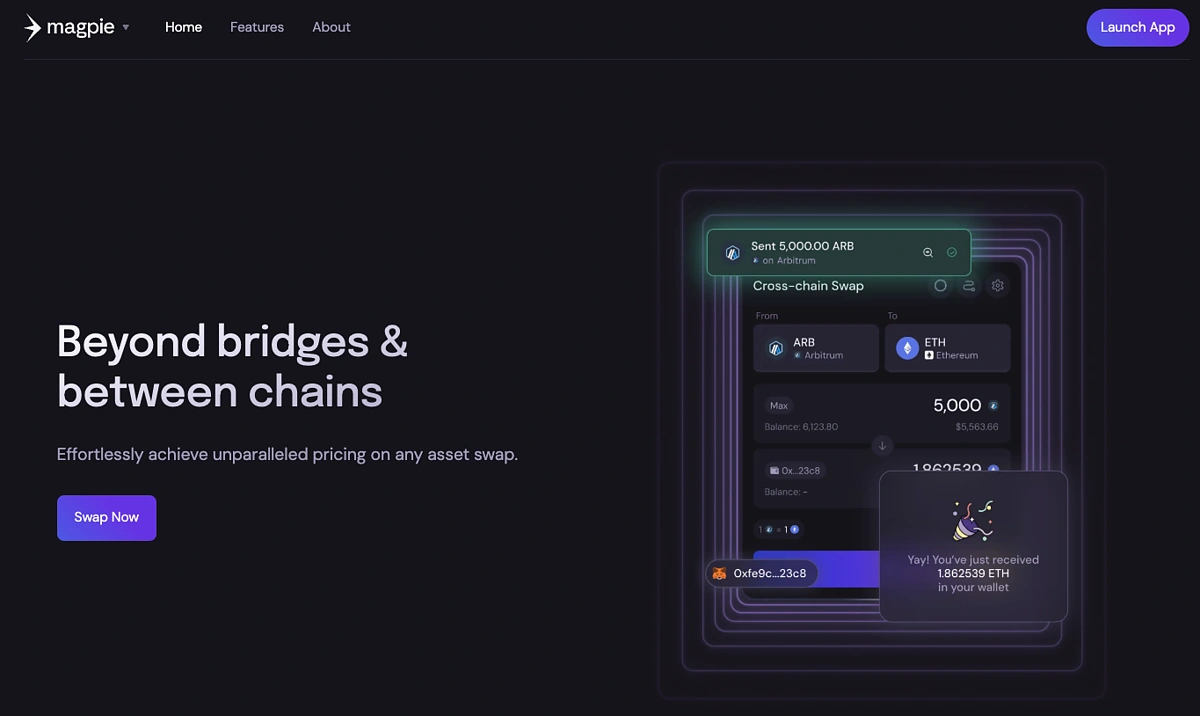
Under the hood, Magpie sources liquidity from both on-chain DEXs and cross-chain bridges, but it abstracts that complexity away. The user just selects the origin and destination asset, and Magpie finds the most efficient route.
For example, a user could swap USDC on Ethereum for S on Sonic in a single transaction. Magpie achieves this with an “intent and execution” model – users sign their intent to swap, and a network of executors/routers carries it out via available bridge liquidity.
Magpie often integrates yield on idle liquidity, making it a sort of liquidity hub. It’s compatible with 12+ chains (Ethereum, BNB Chain, Polygon, Arbitrum, etc.), now including Sonic.
Magpie doesn’t have a “TVL” in the traditional sense because it’s an aggregator, not a static pool.
Check out Magpie Protocol on X to stay up to date with their latest developments.










 Or check it out in the app stores