




Top NFT-samlingskurser rangeret efter markedsværdi
 Ethereum
 Bitcoin
 Solana
 Polygon POS
 BNB Smart Chain
 Arbitrum One
 Optimism
 Ronin
 Avalanche
 Kaia
 Blast
 Base
 Abstract
 Berachain
 ApeChain
 HyperEVM
 Robinhood


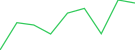
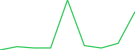
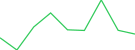
| # | NFT | Laveste pris | 24t | 7d | 30d | De seneste 7 dage | Markedsværdi | 24t volumen | 24t salg | |||
|---|---|---|---|---|---|---|---|---|---|---|---|---|
| - |

|
Nobody
 Ethereum |
0,025 ETH
$ 47,13
|
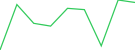
0.0% | 7.5% | 25.7% |
|
$ 471.325
248,91 ETH
|
0 ETH
DKK 0,00
|
- | ||
| - |

|
derplets
 Abstract |
0,009 ETH
$ 17,72
|
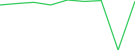
0.0% | 0.0% | 0.0% |
|
$ 59.073
31,20 ETH
|
0 ETH
DKK 0,00
|
- | ||
| - |

|
Neo Tokyo Outer Citizen V2
Ethereum
|
0,050 ETH
$ 93,77
|
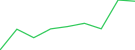
0.0% | 17.5% | 29.2% |
|
$ 337.374
178,17 ETH
|
0 ETH
DKK 0,00
|
- | ||
| - |

|
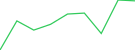
BEVM Whitepaper
 Bitcoin |
0,0001 BTC
$ 6,56
|
0.0% | 0.0% | 0.0% |
|
$ 65.595
0,98 BTC
|
0 BTC
DKK 0,00
|
- | ||
| - |

|
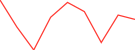
Phanta Bear
Ethereum
|
0,039 ETH
$ 73,84
|
0.0% | 32.9% | 45.5% |
|
$ 738.449
389,98 ETH
|
0 ETH
DKK 0,00
|
- | ||
| - |

|
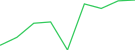
Bitcoin Pandas
Bitcoin
|
0,0002 BTC
$ 10,04
|
0.0% | 0.0% | 0.0% |
|
$ 19.758,73
0,30 BTC
|
0 BTC
DKK 0,00
|
- | ||
| - |

|
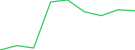
Solana Monke Rejects
 Solana |
0,12 SOL
$ 8,95
|
0.0% | 0.0% | 22.2% |
|
$ 53.701
714,20 SOL
|
0 SOL
DKK 0,00
|
0 | ||
| - |

|
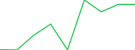
Somnium Space VR
Ethereum
|
0,074 ETH
$ 140,88
|
148.0% | 148.0% | 148.0% |
|
$ 829.786
438,22 ETH
|
0 ETH
DKK 0,00
|
- | ||
| - |

|
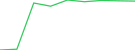
Bears Deluxe
Ethereum
|
0,039 ETH
$ 73,85
|
0.0% | 0.0% | 56.0% |
|
$ 983.369
519,32 ETH
|
0 ETH
DKK 0,00
|
- | ||
| - |

|
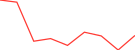
merge
Ethereum
|
0,034 ETH
$ 64,19
|
0.0% | 61.4% | 41.5% |
|
$ 1.326.390
700,48 ETH
|
0 ETH
DKK 0,00
|
- | ||
| - |

|
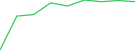
SpacePunksClub
Ethereum
|
0,002 ETH
$ 3,86
|
1.6% | 73.2% | 39.7% |
|
$ 38.594
20,38 ETH
|
0 ETH
DKK 0,00
|
- | ||
| - |

|
Early Retired Cats Club
Ethereum
|
0,001 ETH
$ 2,62
|
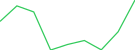
1.4% | 63.6% | 61.6% |
|
$ 5.056,82
2,67 ETH
|
0 ETH
DKK 0,00
|
- | ||
| - |

|
Right Click Share by XCOPY and Deca
Ethereum
|
0,18 ETH
$ 337,72
|
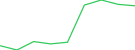
0.6% | 50.4% | 50.4% |
|
$ 346.168
182,81 ETH
|
0 ETH
DKK 0,00
|
- | ||
| - |

|
CALIVERSE Pioneer
Ethereum
|
0,007 ETH
$ 12,82
|
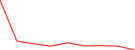
45.2% | 16.4% | 16.4% |
|
$ 71.084
37,54 ETH
|
0 ETH
DKK 0,00
|
- | ||
| - |

|
Drip Squad x Reddit Collectible Avatars
 Polygon POS |
0,002 ETH
$ 3,60
|
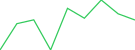
0.1% | 12.4% | 26.4% |
|
$ 1.678.162
886,25 ETH
|
0 ETH
DKK 0,00
|
- | ||
| - |

|
OnChainShiba
Ethereum
|
0,019 ETH
$ 35,67
|
0.0% | 0.5% | 2.1% |
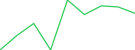
|
$ 107.022
56,52 ETH
|
0 ETH
DKK 0,00
|
- | ||
| - |

|
Consortium Key
Ethereum
|
0,050 ETH
$ 93,92
|
0.0% | 75.2% | 75.2% |
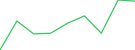
|
$ 141.538
74,75 ETH
|
0 ETH
DKK 0,00
|
- | ||
| - |

|
Galaxy Eggs
Ethereum
|
0,015 ETH
$ 28,17
|
0.0% | 32.4% | 32.4% |
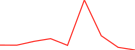
|
$ 281.629
148,73 ETH
|
0 ETH
DKK 0,00
|
- | ||
| - |

|
Zerion DNA 1.0
Ethereum
|
0,0001 ETH
$ 0,240482
|
0.0% | 52.1% | 52.1% |
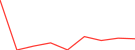
|
$ 100.151
52,89 ETH
|
0 ETH
DKK 0,00
|
- | ||
| - |

|
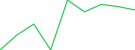
Ultiverse - Electric Sheep
Ethereum
|
0,0005 ETH
$ 0,870468
|
9.8% | 90.6% | 90.6% |
|
$ 8.703,81
4,60 ETH
|
0 ETH
DKK 0,00
|
- | ||
| - |

|
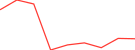
SanFranTokyoGenesisPass
Ethereum
|
0,001 ETH
$ 2,34
|
9.1% | 23.8% | 74.9% |
|
$ 4.688,14
2,48 ETH
|
0 ETH
DKK 0,00
|
- | ||
| - |

|
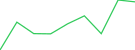
Bit Bears by Berachain
Ethereum
|
0,69 ETH
$ 1.306,55
|
0.0% | 0.0% | 0.0% |
|
$ 3.008.993
1.589 ETH
|
0 ETH
DKK 0,00
|
- | ||
| - |

|
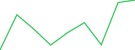
ARCStellars
Ethereum
|
0,12 ETH
$ 236,69
|
0.0% | 7.4% | 45.6% |
|
$ 210.176
111,00 ETH
|
0 ETH
DKK 0,00
|
- | ||
| - |

|
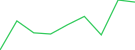
Pixel Vault Founder's DAO
Ethereum
|
0,001 ETH
$ 2,82
|
0.0% | 81.1% | 0.6% |
|
$ 16.651,89
8,79 ETH
|
0 ETH
DKK 0,00
|
- | ||
| - |

|
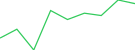
XocietyFrontier
Ethereum
|
0,019 ETH
$ 35,31
|
0.0% | 0.0% | 0.6% |
|
$ 140.340
74,11 ETH
|
0 ETH
DKK 0,00
|
- | ||
| - |

|
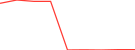
RarePass: Genesis
Ethereum
|
1,00 ETH
$ 1.893,36
|
0.0% | 0.0% | 0.0% |
|
$ 473.341
249,97 ETH
|
0 ETH
DKK 0,00
|
- | ||
| - |

|
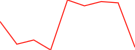
This Thing Of Ours - The NFT Gaming Collective
Ethereum
|
0,011 ETH
$ 20,03
|
0.0% | 77.9% | 4.7% |
|
$ 40.067
21,16 ETH
|
0 ETH
DKK 0,00
|
- | ||
| - |

|
Skid City
 ApeChain |
20,98 APE
$ 1,85
|
0.0% | 0.0% | 0.0% |
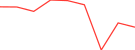
|
$ 10.257,94
116.538 APE
|
0 APE
DKK 0,00
|
- | ||
| - |

|
Yat
Ethereum
|
0,0008 ETH
$ 1,45
|
0.0% | 41.3% | 49.7% |
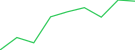
|
$ 21.936
11,58 ETH
|
0 ETH
DKK 0,00
|
- | ||
| - |

|
Farmland
 Avalanche |
1,70 AVAX
$ 13,62
|
0.0% | 0.0% | 21.4% |
|
$ 68.093
8.500 AVAX
|
0 AVAX
DKK 0,00
|
- | ||
| - |

|
RENGA
Ethereum
|
0,040 ETH
$ 75,17
|
0.0% | 0.0% | 9.8% |
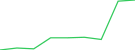
|
$ 685.814
362,18 ETH
|
0 ETH
DKK 0,00
|
- | ||
| - |

|
Planet IX - Assets
Polygon POS
|
0,0000 ETH
$ 0,03787188
|
0.2% | 7.8% | 0.0% |
|
$ 28.645.361
15.128 ETH
|
0 ETH
DKK 0,00
|
- | ||
| - |

|
ThorGuards
Ethereum
|
0,013 ETH
$ 24,62
|
0.0% | 13.3% | 13.3% |
|
$ 246.138
129,99 ETH
|
0 ETH
DKK 0,00
|
- | ||
| - |

|
Ripperz
Avalanche
|
0,59 AVAX
$ 4,73
|
0.0% | 0.0% | 0.0% |
|
$ 6.607,56
824,82 AVAX
|
0 AVAX
DKK 0,00
|
- | ||
| - |

|
8liens NFT
Ethereum
|
0,002 ETH
$ 3,13
|
0.9% | 38.8% | 8.1% |
|
$ 30.797
16,26 ETH
|
0 ETH
DKK 0,00
|
- | ||
| - |

|
Jimmy
Ethereum
|
0,0003 ETH
$ 0,480963
|
0.0% | 0.0% | 0.0% |

|
$ 4.809,63
2,54 ETH
|
0 ETH
DKK 0,00
|
- | ||
| - |

|
Girlies NFT
Ethereum
|
0,003 ETH
$ 5,39
|
0.5% | 16.8% | 16.8% |
|
$ 53.942
28,49 ETH
|
0 ETH
DKK 0,00
|
- | ||
| - |

|
We Are All Going to Die
Ethereum
|
0,003 ETH
$ 5,28
|
0.0% | 1.4% | 1.4% |
|
$ 33.991
17,95 ETH
|
0 ETH
DKK 0,00
|
- | ||
| - |

|
The Catalina Whale Mixer
Solana
|
0,20 SOL
$ 14,96
|
0.0% | 0.0% | 13.3% |
|
$ 83.179
1.106 SOL
|
0 SOL
DKK 0,00
|
0 | ||
| - |

|
RΞMNANTS
Ethereum
|
3,48 ETH
$ 6.580,11
|
0.0% | 4.8% | 4.8% |
|
$ 1.645.027
868,75 ETH
|
0 ETH
DKK 0,00
|
- | ||
| - |

|
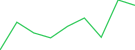
Angry Ape Army
Ethereum
|
0,004 ETH
$ 8,03
|
0.0% | 21.3% | 21.3% |
|
$ 26.758
14,13 ETH
|
0 ETH
DKK 0,00
|
- | ||
| - |

|
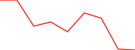
Inhabitants: United Planets
Ethereum
|
0,0005 ETH
$ 0,965524
|
0.0% | 0.0% | 14.9% |
|
$ 30.654
16,19 ETH
|
0 ETH
DKK 0,00
|
- | ||
| - |

|
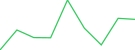
Wilder PALs: GEN
Ethereum
|
0,023 ETH
$ 43,70
|
12.5% | 22.5% | 16.1% |
|
$ 161.528
85,30 ETH
|
0 ETH
DKK 0,00
|
- | ||
| - |

|
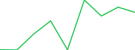
The Anata NFT
Ethereum
|
0,082 ETH
$ 155,65
|
0.0% | 70.3% | 70.3% |
|
$ 310.367
163,91 ETH
|
0 ETH
DKK 0,00
|
- | ||
| - |

|
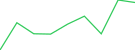
Ordinal BTC Cloaks
Ethereum
|
0,010 ETH
$ 18,94
|
0.0% | 0.0% | 0.0% |
|
$ 67.297
35,54 ETH
|
0 ETH
DKK 0,00
|
- | ||
| - |

|
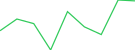
KHUGA
Ethereum
|
0,0010 ETH
$ 1,82
|
0.1% | 88.0% | 21.3% |
|
$ 10.126,36
5,35 ETH
|
0 ETH
DKK 0,00
|
- | ||
What Are NFTs?
A non-fungible token (NFT) is a digital asset or a unique identifier that assigns, links, or proves ownership of unique physical and digital goods. These goods can be anything ranging from artwork, music, digital real estate, or videos. In simple terms, NFTs are unique crypto tokens managed on a blockchain and they can be considered as modern-day collectibles. Each NFT is coded with a unique ID and other metadata that are impossible to replicate on other tokens. The blockchain acts as a decentralized ledger that is used to track the transaction history and ownership of the NFT, and this makes it difficult to be counterfeited or altered. Any digital object can become an NFT and anyone can make an NFT. To convert a digital object to an NFT, you just need to mint or put the object on the blockchain as a token and put the digital artwork for sale. NFT creators can choose to attach a commission to the file and get paid for every sale or resale of the file.
What is a NFT floor price?
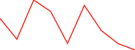
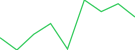
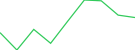
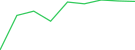
Floor price refers to the lowest price for an NFT collection that someone can buy directly from the market. You can now track market data for NFT collections using our new NFT- data-API.
How to Calculate NFT Floor Prices?
NFT floor price is the lowest price an individual is willing to sell an NFT for. Alternatively, the NFT floor price can also be the lowest amount of ETH a person is able to spend to own an NFT or become a member of an NFT project. NFT floor price is often determined and set by the owner of the NFT. The seller can decide to choose a floor price that is less than that of other similar NFTs within the NFT project. Knowing how to calculate the floor price of an NFT will save you the trouble of making a bad investment. In most cases, NFT investors use the floor price to determine the rarity of an NFT and find out if the NFT project has the chance of appreciating in value. The major determinant of the value of NFT floor price is the demand. If the NFT is in high demand, the seller will not want to sell it at a price lower than the value of other NFTs in the project. But if the reverse is the case and the demand for the NFT is low, the seller will most likely pick a low floor price in order to sell out the NFT quickly before it freezes out. As stated above, the floor price of an NFT is determined by the demand for the NFT. Below are factors that can affect the demand for an NFT and ultimately affect the floor price of NFTs: - The utility of the NFT - The uniqueness of the product - Creator's popularity - The product appeal to a wide range of buyers - The diversity of the NFT creators
What is NFT Market Cap?
NFT market cap is the total value of all NFTs in a collection in circulation, calculated by multiplying the total supply of NFTs in a collection by the current floor price. It serves as a valuation indicator to compare NFT assets with each other and with other cryptocurrencies. The rank that we assign to a collection reflects its position across all NFT collections in all the chains that we are tracking, hence you can consider it as a global market cap ranking.
How Do NFTs Differ From Cryptocurrencies?
Cryptocurrencies are identical to each other and can serve as a medium of commercial exchange, NFTs on the other hand, cannot be exchanged or traded at equivalency. This is because they are not identical to each other. Fungible items like cryptocurrency and fiat money can be exchanged with one another without losing value because their value is not tied to their uniqueness. An example of a fungible item is a dollar bill. Every $1 bill has the same value, so exchanging one bill with another bill that has a different serial number will in no way reduce the value of the $1 bill. The reverse is the case with NFTs. Each token is unique and is not always worth the same amount as other similar tokens.
Why Do NFTs Have Value?
The primary reason for NFT value is that each token is unique and cannot be interchanged. NFTs are also valuable because they help verify the authenticity and ownership of a non-fungible asset. Even though these digital assets may be duplicated, the original is unique and irreplaceable. Plainly put, the value of NFTs is tied to the non-fungibility of the tokens. Unlike fungible tokens, NFTs cannot be broken down into smaller units. Fungible tokens such as bitcoin are divisible into smaller units. For instance, bitcoin can be split into Satoshi. The implication of this is that even though an NFT asset can be copied, the digital certificate of ownership that can be bought or sold along with the artwork can't be duplicated. Only the original asset has the ownership certificate. So while other people may have access to the asset, none of them can claim ownership of it. Even though the NFTs are virtual, the fact that their ownership and authenticity can be verified makes them valuable.
What are NFTs Used For?
NFT buyers can choose to do whatever they like with their NFT after purchase. In most cases, the use of the NFT is dependent on what type of NFT it is.
Some may choose to hold NFTs that they believe will have long-term value, while others may sell their NFTs after buying just to make some profit. Savvy NFT traders take advantage of price fluctuations and actively trade NFTs to generate profit.
On the other hand, some NFT buyers like art collectors are not interested in reselling the NFT. They buy NFTs because they like collecting them. This group of buyers derive joy from knowing that they are the sole owners of certain digital assets.
Also, the importance and uses of NFTs keeps increasing as more categories are being discovered.
Below are some things you can use NFTs for:
1. Verifying the Authenticity of Products
NFTs are used to store information regarding the manufacturing process and ownership of a product on the blockchain.
This information cannot be tampered with or duplicated.
The fact that all this information about a product can be accessed easily helps to solve the problem of the circulation of fake copies of a product.
2. Gaming Industry
The uses of NFTs in the gaming industry cannot be overemphasized. Game developers use NFTs to create a constant stream of revenue by having gamers buy and trade in-game NFT items.
The use of NFTs in the gaming industry also enables gamers to make easier and safer transactions devoid of middlemen within the blockchain.
3. Intellectual Property and Patents
You can use NFTs to protect intellectual property and patents and also prove your ownership of any piece of digital content.
The traditional IP right tools like trademarks and copyrights are not as efficient as NFTs when it comes to protecting and proving the real ownership of a piece of content.
With NFTs, the creator of content can prove that he is the original creator of a digital asset at any given time.
4. Utility in the Metaverse
NFTs play a leading role in shaping the virtual reality future like the metaverse.
Literally, every item sold in the metaverse is an NFT. Transactions are already being made in the metaverse using NFT coins.
The future avatar of every metaverse user is also an NFT.
How to Mint NFTs
Anyone can mint NFTs. This minting can be done on many of the available NFT marketplaces like OpenSea, SuperRare, and Rarible.
Because many of these marketplaces are only available on the Ethereum network, you must have Ethereum's native currency Ether, and a wallet compatible with the Ethereum network to be able to mint NFTs.
The process of minting NFTs in each marketplace may be slightly different, but they are similar. The major difference in the minting process is the fees charged by each marketplace.
The minting steps below are applicable to most marketplaces:
Step 1: Create a Crypto Exchange Account.
You will need Ether in your wallet to pay the minting fee.
Step 2: Create a Crypto Wallet
To get started with the minting process you need to open a crypto wallet and connect it to the NFT Marketplace.
If you are using a wallet like Coinbase or MetaMask, you may be asked to connect your wallet through a QR code scanner on your smartphone or download the wallet to your computer.
Step 3: Send Ether to your Wallet
After setting up your wallet, the next thing to do is to send Ether from your exchange to your wallet.
In most cases, you will be able to send crypto to a wallet with a public address.
Your wallet's public address will always be visible when you open your wallet plugin on the browser or on your smartphone.
Step 4: Connect Your Wallet
After opening your wallet, go to the website of the platform you are using and click on the profile option.
When you do this, you will see an option for connecting your wallet to the marketplace.
Select the option.
Once the wallet is connected and your marketplace profile has been created, you will need to complete your profile by entering a username and your email address to verify your account.
Your profile can include information such as what type of crypto you accept as payment, your website, and social media link, and some information about yourself.
Step 5: Mint Your NFT
After opening your wallet, go to the website of the platform you are using and click on the profile option.
When you do this, you will see an option for connecting your wallet to the marketplace.
Select the option.
Once the wallet is connected and your marketplace profile has been created, you will need to complete your profile by entering a username and your email address to verify your account.
Your profile can include information such as what type of crypto you accept as payment, your website, and social media link, and some information about yourself.
Step 6: Sell Your NFT
After creating your NFT, you will need to list it for sale.
To do this, click on the "Sell" option on your NFT page. You will be redirected to a new page where you can choose to sell your NFT for a fixed price or auction it.
If you are selling at a fixed price, set the price you want to sell at, then complete the listing.
Before finally listing your NFT for sale, your platform may ask you to initialize your wallet. You will also need to confirm the selling price through your wallet.
Once this is done, your NFT has been minted and is ready for sale.


 Eller tjek den ud i app-butikkerne